
Destination or Hotel
Departure airport
Travel dates
Guests
Destination or Hotel
Departure airport
Travel dates
Guests
Not sure where to stay in Switzerland?
Chat with our destination guide for travel tips and FAQs.
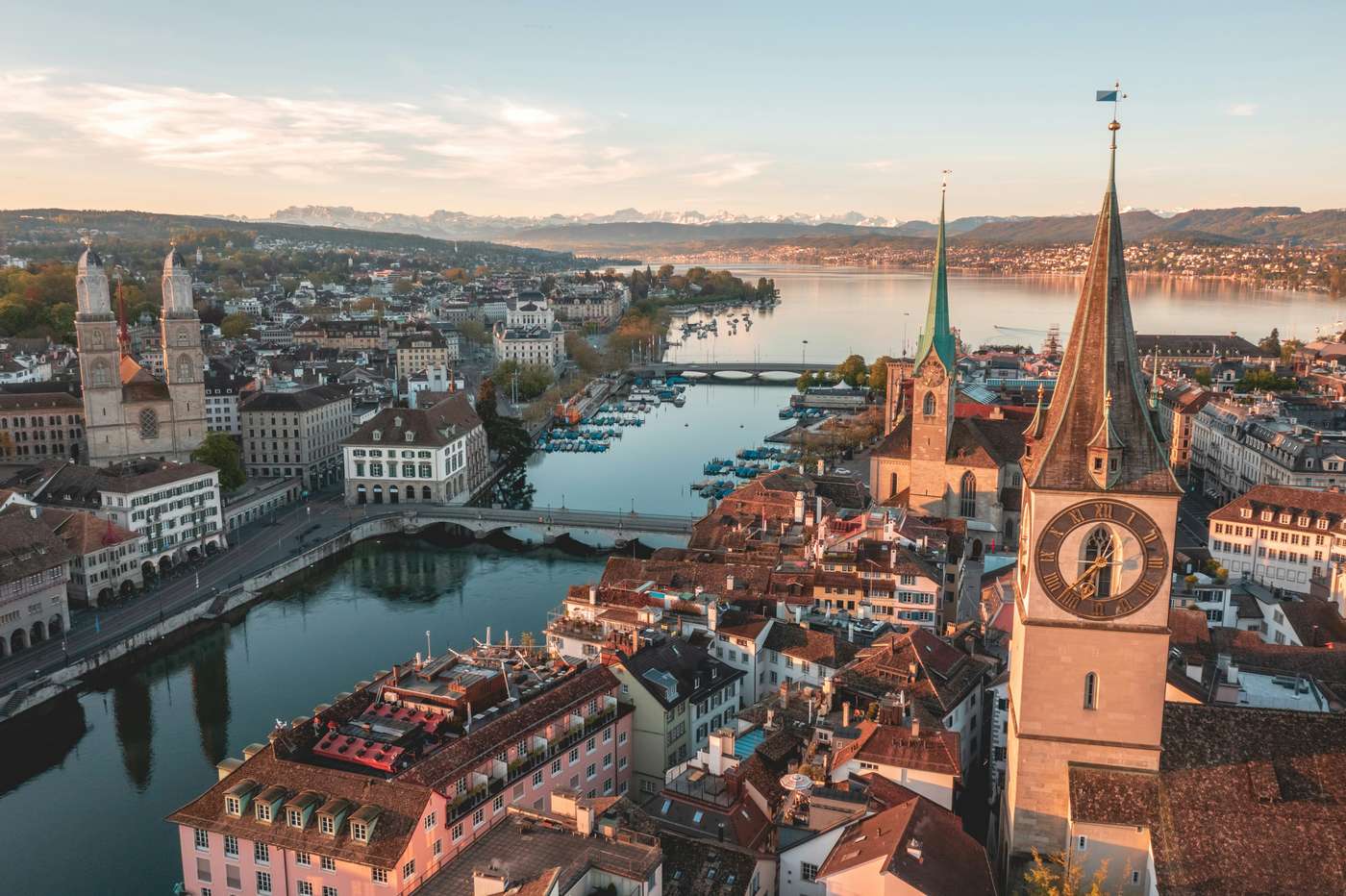
Switzerland is one of those places that genuinely looks like a screensaver come to life. Whether you're after a city break with mountain views or an adventure-packed jolly with your mates, Switzerland delivers.
Switzerland Holiday Highlights 2026/2027
Alpine Scenery - The views are outrageous. Crystal-clear lakes, snow-topped peaks, and green valleys that make your phone camera work overtime.
World-Class Trains - Swiss trains are famously punctual and ridiculously scenic. The Bernina Express and Glacier Express routes are bucket list stuff.
Chocolate and Cheese - This is the country that gave the world Toblerone, Lindt, fondue, and raclette. Your taste buds are in for a proper good time.
City Breaks with a View - Zurich, Geneva, Lausanne, and Basel all combine culture, food, and lakeside charm with alpine backdrops.
Good to Know
Summer highs of around 25°C in the cities (June to August), with up to 8 hours of sunshine a day in July. The mountains are cooler, so pack a layer even in peak summer.
Switzerland uses the Swiss Franc (CHF), not the Euro. A pint will set you back around CHF 7 to 8 (roughly £7), and a main course at a mid-range restaurant is about CHF 25 to 40 (£24 to £38). It's not cheap, but the quality is top-tier.
Switzerland has four official languages: German (about 63%), French (23%), Italian (8%), and Romansh (under 1%). You'll hear different languages depending on which city you visit, but English is widely spoken in tourist areas.
Top Swiss Hotels 2026/2027
Switzerland is a glorious city break destination, with hotels spread across Zurich, Geneva, Lausanne, and Basel. Here are some of the standout picks.
Couples
Hotel St. Gotthard, Zurich - A 19th-century classic right on Bahnhofstrasse, opposite Zurich's main station. Think spa, cocktail bar, and an easy stroll to the Old Town and lake. The location is brilliant for exploring the city hand in hand.
Lake Geneva Hotel, Geneva - Floor-to-ceiling windows looking straight out over Lake Geneva. It's a bit out of the city centre in Versoix, but the waterfront setting and peaceful vibe make it a proper romantic spot.
Families
Best Western Plus Hotel Zürcherhof, Zurich - Family-run, central, and right in Zurich's Old Town. The complimentary Swiss breakfast buffet (with Prosecco for the parents) is a nice touch, and you're a short walk from the Swiss National Museum and Zoo Zurich.
Home Swiss Hotel, Geneva - A modern, no-fuss option in Geneva with 39 rooms, free public transport passes, and easy access to the city centre. Great for families who want a comfortable base without breaking the bank.
Groups
ibis Geneve Centre Nations, Geneva - 216 rooms, a 24-hour bar, and a game room. Minutes from Cornavin station and easy access to Geneva's nightlife. Perfect for groups who want a central, affordable base.
St. Josef, Zurich - A sustainability-focused hotel in the heart of Zurich's Niederdorf district, just 3 minutes from the Old Town's bars and restaurants. 46 rooms, eco-friendly credentials, and brilliant for groups exploring Zurich on foot.
Luxury
La Reserve Eden au Lac Zurich - This is the fancy one. Heated floors, 24-hour fitness centre, spa with sauna and massage, and two restaurants. It's a five-minute walk from the Zurich Opera House, with lake views that'll have you reaching for your camera constantly.
Storchen Zurich, Lifestyle Boutique Hotel - A beautifully renovated riverside hotel right on the Limmat, with 67 rooms and views across to the Old Town. Two minutes from Bahnhofstrasse shopping, with an on-site restaurant, bar, and that properly classic Swiss luxury feel. One of the best locations in the city.
Chateau d'Ouchy, Lausanne - A lakeside castle hotel in Lausanne with 50 rooms, a spa, and views over Lake Geneva to the Alps. Steps from the Olympic Museum and Ouchy harbour. If you want to feel like Swiss royalty, this is the one.
Value
ibis Geneve Centre Lac, Geneva - Two minutes from Cornavin station, right near the lake, with a 24-hour bar and fresh pastry breakfast buffet. At 89 rooms it's one of the more affordable options in Geneva without sacrificing location.
Must Do on Your Switzerland Holidays 2026/2027
Scenic Train Rides - The Bernina Express runs from Chur to Tirano through glaciers, gorges, and UNESCO-listed landscapes. The Glacier Express between Zermatt and St. Moritz is equally jaw-dropping. Book a window seat and just stare.
Chateau de Chillon - This medieval castle sits right on the shore of Lake Geneva near Montreux. It's over 1,000 years old, ridiculously photogenic, and the dungeons are properly atmospheric. One of the most visited historic sites in the country.
Gruyeres - The town that gave the world its favourite fondue cheese. Tour the Maison du Gruyere cheese factory, then sit down for raclette or fondue in the medieval old town. It's touristy but completely worth it.
Chocolate Factory Visits - The Lindt Home of Chocolate in Kilchberg (near Zurich) has the world's largest chocolate fountain and interactive exhibits. Maison Cailler near Gruyeres is another cracker. Budget extra for the gift shop.
Lake Lucerne - Take a paddle steamer across one of the most scenic lakes in the Alps. The surrounding mountains, including Mount Pilatus and Rigi, are accessible by cable car and offer panoramic views that'll stay with you.
Paragliding in Interlaken - For adrenaline junkies, tandem paragliding over Interlaken with views of the Eiger, Monch, and Jungfrau is hard to beat. No experience needed, just a head for heights.
Where to Stay on Your Switzerland Holidays
Families
Zurich is your best bet for families. Zoo Zurich, the Swiss National Museum, and the Lindt Home of Chocolate are all easy day trips, and the city's transport links make getting around with little ones straightforward. Lausanne is another strong option, with the Olympic Museum, lakeside parks, and a more relaxed pace.
Couples
Geneva is the romantic pick, with its lakeside promenades, Old Town charm, and easy access to the Lavaux wine region. Zurich also works brilliantly for couples who want a mix of culture, food, and nightlife alongside those alpine views.
Groups
Zurich is the go-to for groups. The Old Town (Niederdorf) is packed with bars, restaurants, and late-night spots, and you've got easy access to adventure activities in the surrounding Alps. Geneva is a solid alternative with a more international vibe and plenty of nightlife around the Paquis district.
Local Lingo for Your Switzerland Holidays
Switzerland has four official languages, so the phrases you'll hear depend on where you are. Zurich and Basel are German-speaking, while Geneva and Lausanne are French-speaking. So here's how to tell your Merci from your Sprechen ze?
Swiss German (Zurich, Basel & Central Switzerland)
Grüezi (GREW-tsee) - Hello. The classic Swiss German greeting you'll hear everywhere.
Merci vilmal (MER-see FEEL-mahl) - Thank you very much. A warm way to show appreciation.
En Guete! (en GOO-eh-teh) - Bon appetit. Said before every meal, from fondue to bratwurst.
Prost! (PROHST) - Cheers. Clink glasses and make eye contact, the Swiss take that seriously.
Uf Wiederluege (oof VEE-der-loo-eh-geh) - Goodbye. A proper Swiss send-off.
Swiss French (Geneva, Lausanne & Western Switzerland)
Bonjour (bon-ZHOOR) - Hello. The standard greeting across Geneva and Lausanne.
S'il vous plait (seel voo PLAY) - Please. Essential for ordering at restaurants and cafes.
Merci beaucoup (mer-SEE bo-KOO) - Thank you very much. Always goes down well.
Sante! (son-TAY) - Cheers. Raise your glass in any bar along Lake Geneva.
C'est combien? (say com-bee-EN) - How much is it? Handy for browsing the markets in Lausanne.
Switzerland Travel Guide 2026/2027
Families
Swiss Museum of Transport, Lucerne - Interactive exhibits where kids can drive a train simulator, take a virtual flight, and explore a planetarium. A full day out and one of the best family attractions in the country.
Zoo Zurich - Over 380 species across themed zones including the Masoala Rainforest hall, where you walk through a tropical ecosystem. Little ones love the penguin parade and the elephant park.
Grindelwald for Beginners - Family-friendly ski slopes, excellent ski schools, and the First Cliff Walk, a dramatic viewing platform that's thrilling but safe. Brilliant in winter and summer alike.
Lindt Home of Chocolate, Kilchberg - Just outside Zurich, this museum has the world's largest chocolate fountain (over 9 metres tall) plus interactive chocolate-making workshops for kids.
Lake Geneva Boat Trip - CGN ferries cross the lake from Geneva and Lausanne, stopping at pretty waterfront towns. Kids love being on the water and parents love the mountain views.
Couples
Bernina Express - One of the most scenic train journeys in the world, crossing 196 bridges and passing through 55 tunnels between Chur and Tirano. Pack a picnic, grab a window seat, and just enjoy the ride together.
Thermal Baths in Leukerbad - The largest thermal spa complex in the Alps, with outdoor pools overlooking snow-dusted peaks. Properly dreamy for a couples' day out, especially in winter.
Lavaux Vineyard Train - A UNESCO World Heritage wine region on the shores of Lake Geneva near Lausanne. Ride the vineyard train, stop for a Chasselas tasting, and soak in the terraced hillside views.
Zurich Old Town by Night - Wander the cobbled lanes of Niederdorf, pop into a cosy wine bar, then cross the river to see the Grossmunster and Fraumunster churches lit up against the lake.
Zermatt and the Matterhorn - Even if you don't ski, the Gornergrat railway takes you up to 3,089m for views of the Matterhorn that are genuinely breathtaking. The car-free village is charming and walkable.
Groups
Skiing in Verbier - One of Switzerland's top ski resorts with challenging runs, a buzzing apres-ski scene, and group-friendly chalet options. The Freeride capital of the Alps.
Paragliding Over Interlaken - Tandem flights launch from the hillside and soar over turquoise lakes and jagged peaks. An absolutely unreal group activity that everyone will be talking about for years.
Cheese and Chocolate Tours - Hit up the Gruyere cheese factory and Maison Cailler chocolate factory in the same day trip. Tastings included, and it's a brilliant group day out from Geneva or Lausanne.
Zurich Nightlife - Langstrasse is the main strip for bars and clubs, while Niederdorf has more of a traditional pub crawl vibe. Group-friendly, walkable, and plenty of options for every budget.
Via Ferrata Climbing - Iron rung climbing routes across cliff faces in the Swiss Alps. Safety cables mean you don't need to be a pro, but the views and the buzz are properly next level. Routes near Interlaken and in the Engadin are popular choices.
More Destinations for 2026/2027
Switzerland Cities
Zurich - Switzerland's biggest city, with a buzzing Old Town, world-class museums, lakeside vibes, and easy access to the Alps.
Geneva - Lakeside glamour, international flair, and the famous Jet d'Eau fountain. The gateway to the French-speaking side.
Lausanne - Home of the Olympic Museum, perched on hills above Lake Geneva with vineyard country on its doorstep.
Basel - Switzerland's cultural capital, with over 40 museums, Rhine river swims, and a seriously good food scene.
Neighbouring Countries
France - From Parisian city breaks to Riviera beaches, Switzerland's French-speaking neighbour has it all. Paris is a short flight away.
Germany - Beer gardens, Christmas markets, and brilliant city breaks in Berlin and Munich. Switzerland's biggest neighbour and just as easy to get to.
Austria - Alpine scenery, classical music, and coffee house culture. Vienna, Salzburg, and Innsbruck are all on On the Beach.
Poland - Medieval old towns, incredible food, and prices that'll make your jaw drop after Switzerland. Krakow is a brilliant city break.
Popular Switzerland hotels
More Switzerland hotelsWeather in Switzerland
JAN
FEB
MAR
APR
MAY
JUN
JUL
AUG
SEP
OCT
NOV
DEC
Planning your trip? See month-by-month averages and find the best time to go. Switzerland weather by month
View destination on a map
View destination on a map
FAQs
What's the best time to visit Switzerland?
What's the best time to visit Switzerland?
Is Switzerland expensive?
Is Switzerland expensive?
It's one of the pricier destinations in Europe, no sugar-coating it. A pint costs around CHF 7 to 8 (roughly £7), and a restaurant main course is typically CHF 25 to 40 (£24 to £38). But the quality is exceptional, and there are ways to save. Supermarkets like Migros and Coop do brilliant takeaway lunches for under CHF 12, and the free public transport cards offered by many hotels help cut travel costs.
Do I need to speak another language?
Do I need to speak another language?
English is widely spoken in tourist areas across Switzerland, especially in Zurich and Geneva. That said, a few words of German or French go down well with locals. The language changes depending on where you are: German in the north and east, French in the west, Italian in the south.
What currency does Switzerland use?
What currency does Switzerland use?
Switzerland uses the Swiss Franc (CHF), not the Euro. Some tourist spots and larger shops in border areas accept Euros, but you'll usually get change back in CHF. Card payments are widely accepted, but it's worth having some cash for smaller shops and markets.
Does Switzerland have Christmas markets?
Does Switzerland have Christmas markets?
Absolutely, and they're some of the best in Europe. Basel has the oldest and largest in the country, spread across Barfusserplatz and Munsterplatz, with over 180 stalls and a massive decorated tree. Zurich goes all out with the Christkindlimarkt inside the main station (one of the biggest indoor markets in Europe), a Christmas village near the Opera House, and a Singing Christmas Tree in the Old Town. Geneva and Lausanne run lakeside markets with fondue chalets and craft stalls. Most markets run from late November to 23rd or 24th December, so a late November or early December city break is ideal for catching them at their best. Have a look at our Christmas market breaks for more inspiration.
Do I need a visa to visit Switzerland?
Do I need a visa to visit Switzerland?
It depends on your nationality. Switzerland is not an EU member but is part of the Schengen Area, which affects how entry works for UK and Irish travellers differently.
UK passport holders:
No visa required for tourist visits of up to 90 days in any 180-day period
This is the standard Schengen 90/180 rule, the same that applies across most of Europe
Your passport must be valid for the duration of your stay
The EU's ETIAS travel authorisation scheme, when it eventually launches, will apply to Switzerland as a Schengen member, check gov.uk for the latest before travelling
Irish passport holders:
No visa required, Ireland is an EU member and Irish citizens have freedom of movement rights
No time limit applies for stays in Switzerland as a practical matter, though Switzerland is not an EU member itself
Practical entry tips:
Carry your passport rather than a national ID card, Switzerland may conduct border checks even within the Schengen zone, and UK travellers cannot use EU/EEA fast-track lanes
Travel insurance is strongly recommended, Switzerland is not covered by the UK Global Health Insurance Card (GHIC), meaning medical costs without insurance can be very high
There is no requirement to register with local authorities for short tourist stays
How do I get around Switzerland?
How do I get around Switzerland?
Switzerland has one of the best public transport networks in the world, trains, buses, boats, and mountain railways all run on time, connect almost everywhere, and are genuinely pleasurable to use.
The Swiss Travel Pass - worth it for most visitors: The Swiss Travel Pass gives unlimited travel on the national rail, bus, and boat network, plus free entry or discounts at over 500 museums. It's not cheap, but for a trip built around moving between destinations it usually pays for itself within a day or two.
3 days: from around £230 per adult
4 days: from around £265
8 days: from around £335
15 days: from around £390
Under-25s get a youth discount; children under 16 travel free with a parent
Getting around by train:
Swiss Federal Railways (SBB) connects all major cities, Zurich, Geneva, Basel, Bern, Lucerne, and Interlaken are all well served
Trains are punctual to a degree that feels almost theatrical, delays of more than a few minutes are genuinely unusual
Scenic rail routes are a destination in themselves:
Glacier Express - 8 hours from Zermatt to St Moritz through the Alps
Bernina Express - Chur to Tirano across the UNESCO-listed Bernina Pass
GoldenPass Line - Lucerne to Montreux through the Bernese Oberland
Wilhelm Tell Express - lake steamer plus train from Lucerne to Lugano
Mountain transport:
Cable cars, gondolas, funiculars, and rack railways extend the network into the Alps
Most are covered or discounted with the Swiss Travel Pass
Key routes: Jungfraujoch (Top of Europe, 3,454m), Schilthorn, Gornergrat above Zermatt, Pilatus above Lucerne
Getting around by car:
A road tax vignette (motorway sticker) is required for driving on Swiss motorways - currently around £40 for an annual sticker, available at border crossings, petrol stations, and post offices
Mountain roads are well maintained but can be narrow and require confidence
Some Alpine resorts, Zermatt, Wengen, Mürren, are car-free entirely and accessed only by train or cable car
Driving is generally the better option for rural areas not well served by rail
City transport:
Zurich, Geneva, Basel, and Bern all have excellent tram and bus networks
Most cities offer a free public transport card for hotel guests, ask at check-in
Cycling infrastructure is excellent in flatter areas; bike hire is widely available
What should I eat and drink in Switzerland?
What should I eat and drink in Switzerland?
Swiss cuisine is hearty, alpine, and deeply regional, shaped by French, German, and Italian influences depending on where in the country you are. It's also, like most things in Switzerland, not cheap. But eating well here is one of the genuine pleasures of the country.
Essential dishes to try:
Fondue - the national dish in all but official designation. Melted cheese (typically Gruyère, Emmental, or a blend) in a communal pot, eaten by dipping bread on long forks. Best in a traditional restaurant in the Bernese Oberland or Fribourg, the region that claims to have invented it. Order a carafe of white wine or kirsch alongside, tradition holds that drinking cold water or beer with fondue is bad for digestion, though the evidence is debatable.
Raclette - a wheel of cheese melted and scraped onto boiled potatoes, served with pickled gherkins and onions. Simpler than fondue and equally good. Originally from Valais, now eaten across the country.
Rösti - a thick, crispy fried potato cake, somewhere between a hash brown and a potato pancake. The unofficial national side dish, eaten at breakfast, lunch, and dinner. The invisible cultural line between German-speaking and French-speaking Switzerland is actually called the Röstigraben (rösti ditch).
Zürcher Geschnetzeltes - sliced veal in a cream and white wine sauce with mushrooms, served on rösti. Zurich's signature dish and one of the best things on any menu in the German-speaking part of the country.
Bircher muesli - invented in Zurich by Dr Maximilian Bircher-Brenner around 1900. Raw oats soaked overnight in apple juice or water, mixed with grated apple, lemon juice, and cream or yoghurt. The Swiss version is nothing like the dried packet variety.
Älplermagronen - alpine macaroni cheese with potatoes, cream, and fried onions, typically served with apple sauce. A mountain hut staple and one of the most comforting dishes in the Alps.
Bündner Nusstorte - a caramelised walnut tart from the canton of Graubünden. Rich, dense, and very good with coffee.
Swiss chocolate: Switzerland produces some of the world's finest chocolate, and buying it from a local chocolatier rather than a supermarket is worth the price difference. Key names:
Läderach - intense, high-quality fresh chocolate. Buy a slab of FrischSchoggi (fresh chocolate) from any branch
Sprüngli - Zurich's iconic chocolatier, in business since 1845. The Luxemburgerli (small macarons) are the thing to buy
Cailler - Switzerland's oldest chocolate brand, based in Broc near Gruyères. Factory tours available
Favarger - Geneva-based, one of the last bean-to-bar Swiss makers
Swiss drinks:
Rivella - a uniquely Swiss soft drink made from milk whey, lightly fizzy and impossible to describe. Ubiquitous and worth trying once.
Swiss white wine - massively underrated internationally because almost none is exported. Chasselas from Lavaux (UNESCO-listed vineyards above Lake Geneva) is delicate and mineral. Pinot Gris from Valais is fuller and excellent. Order the local wine wherever you are.
Swiss beer - Feldschlösschen and Cardinal are the mainstream lagers; Appenzeller and Locher are the better craft options from the east of the country
Kirsch - cherry eau-de-vie from central Switzerland, used in fondue and consumed as a digestif. Stronger than it looks.
Rivella, Appenzeller Alpenbitter, and Lugarno - regional spirits and liqueurs worth trying in their home regions
Where Swiss food varies by region:
German Switzerland (Zürich, Bern, Basel): Rösti, sausages (cervelat, bratwurst), hearty meat dishes, excellent bread
French Switzerland (Geneva, Lausanne, Valais): Fondue, raclette, refined French-influenced cooking, great wine
Italian Switzerland (Ticino): Risotto, polenta, ossobuco, grappa - feels more like northern Italy than the rest of Switzerland
Graubünden (Grisons): Bündnerfleisch (air-dried beef), nusstorte, hearty alpine cooking
What is Switzerland best known for?
What is Switzerland best known for?
Switzerland punches significantly above its weight for a landlocked country of 9 million people. It's one of the most recognisable nations on earth, associated with a very specific set of qualities that have become globally synonymous with excellence, precision, and natural beauty.
The Alps: Switzerland's defining feature. The Alps cover around 60% of the country's land area, with 48 peaks above 4,000 metres. The Matterhorn above Zermatt is one of the world's most photographed mountains. Jungfraujoch, the highest railway station in Europe at 3,454m, draws over a million visitors a year. Winter skiing and summer hiking are both world-class, resorts like Verbier, Zermatt, St Moritz, Wengen, and Grindelwald consistently rank among the best in Europe.
Watchmaking: Switzerland produces around 20% of the world's watches by value despite making less than 2% by volume, almost entirely because of the luxury end of the market. The Jura region, particularly around La Chaux-de-Fonds and Le Locle (both UNESCO World Heritage Sites for their watchmaking urban planning), is the historic heart of the industry. Rolex, Patek Philippe, Omega, Longines, IWC, TAG Heuer, Breitling, and Swatch are all Swiss.
Chocolate and cheese: Switzerland exports chocolate to over 100 countries. Emmental, Gruyère, Appenzeller, and Raclette are all Swiss in origin and internationally protected designations. The country takes both seriously enough that they're embedded in cultural identity, not just agriculture.
Neutrality and international diplomacy: Switzerland has maintained political neutrality since 1815, one of the longest unbroken periods of peace of any European state. As a result, Geneva hosts the headquarters of the International Red Cross, the UN's European headquarters, the World Health Organisation, and hundreds of other international bodies. It's one of the world's most significant cities for international law and diplomacy despite not being an EU member.
Banking and finance: Switzerland's banking sector manages around 25% of the world's offshore private wealth. Zurich and Geneva are both global financial centres. Swiss banking confidentiality, though significantly reformed since 2009, remains a defining feature of the country's financial reputation.
Quality of life: Swiss cities consistently dominate global quality of life rankings. Zurich and Geneva regularly appear in the top three cities worldwide in Mercer and EIU surveys, for infrastructure, safety, healthcare, education, and natural environment. It's expensive, but what you get in return is considerable.
Switzerland by numbers:
Four official languages: German (63%), French (23%), Italian (8%), Romansh (less than 1%)
26 cantons, each with significant autonomy, Switzerland is a federal state in the truest sense
208 mountains above 3,000 metres
Over 1,500 lakes
Joined the United Nations only in 2002 - one of the last countries to do so
Has never been a member of the EU, despite being surrounded by EU member states on all sides