Located in southern Germany, Munich sits on the banks of the River Isar and is near the Bavarian Alps, making it a hub for culture, beer gardens, and day trips.
Highlights of your holidays to Munich 2026 and 2027
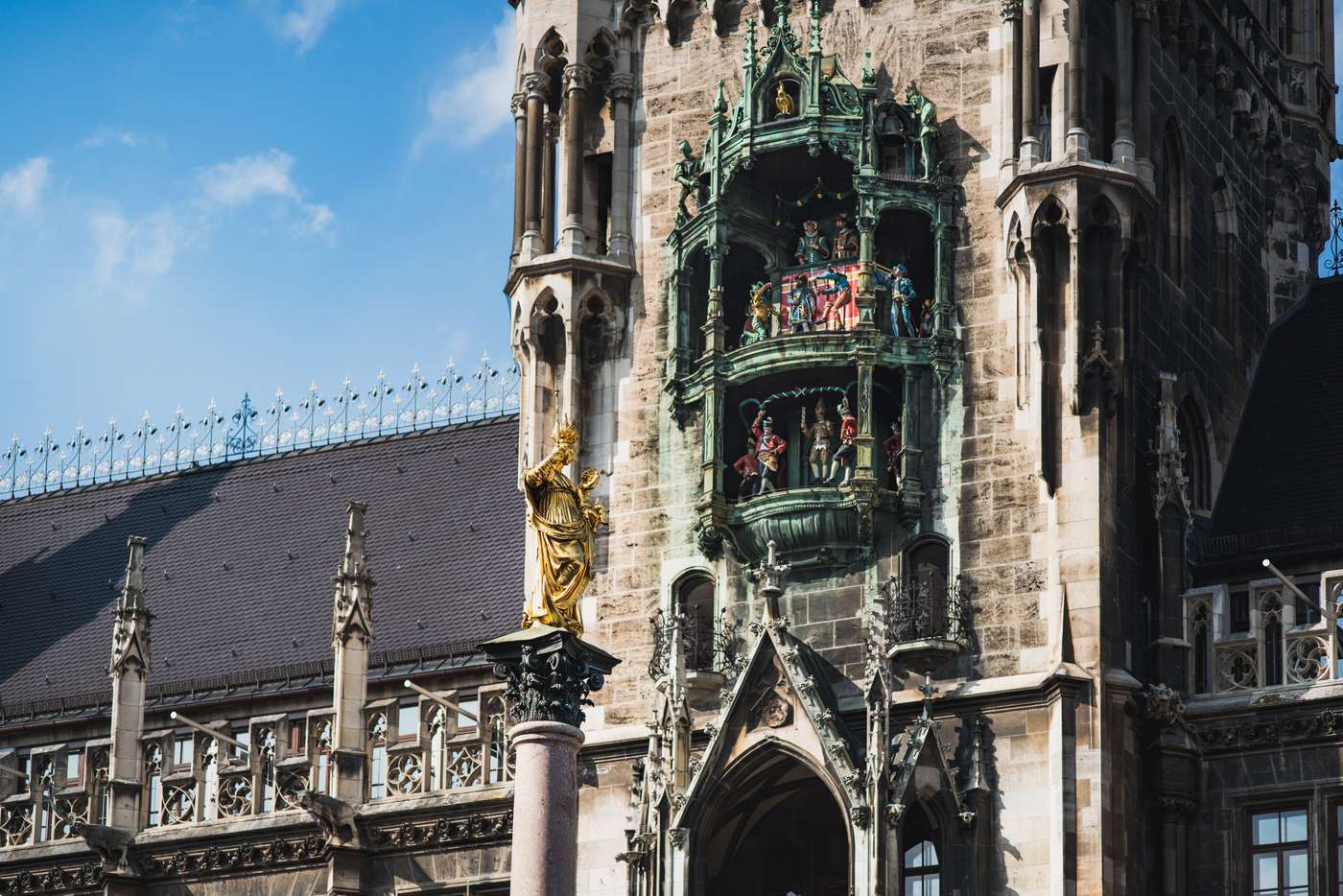
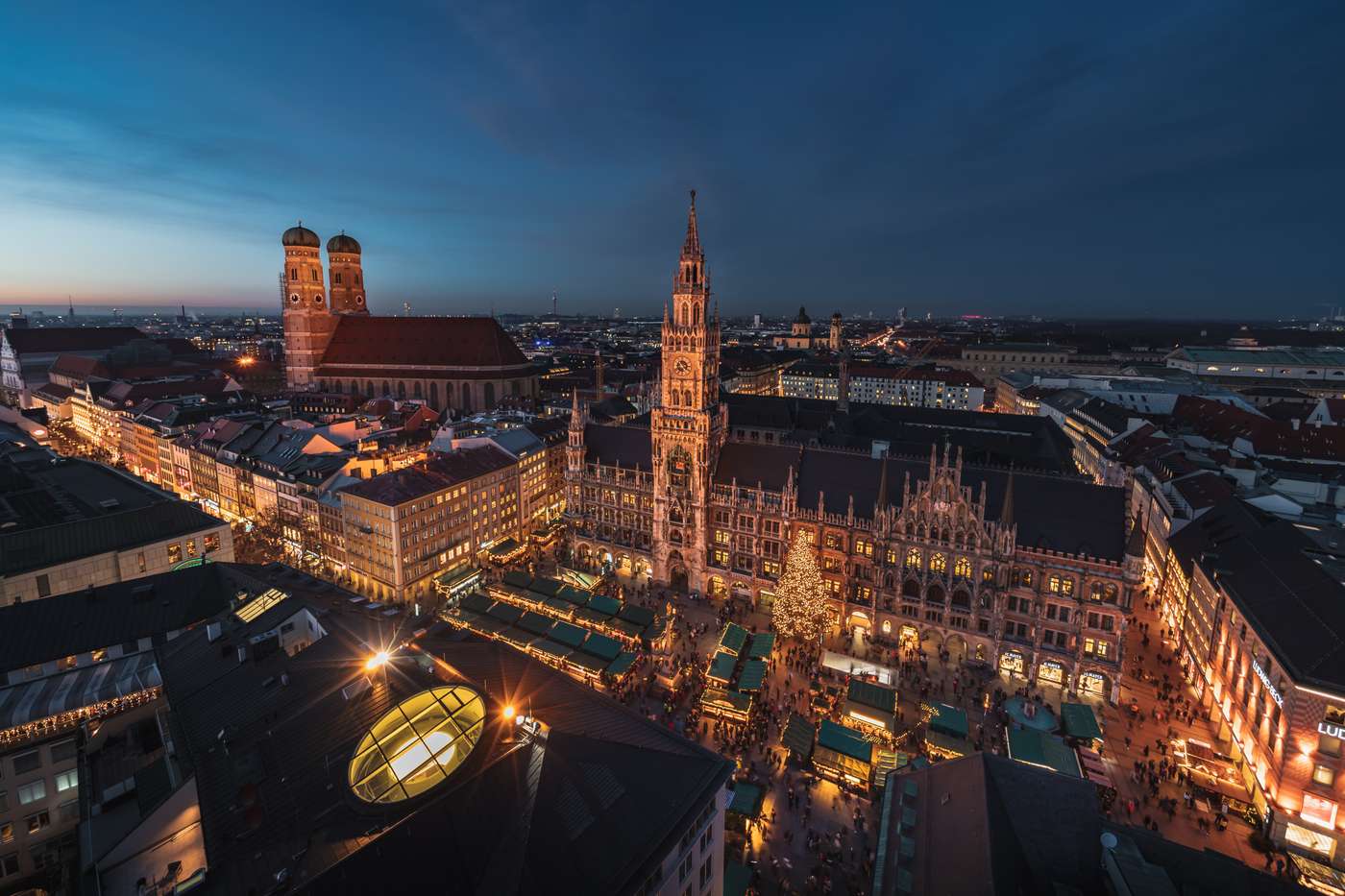
Marienplatz - The heart of the Old Town, where the Glockenspiel in the New Town Hall tower plays at 11am and noon every day (and 5pm from March to October).
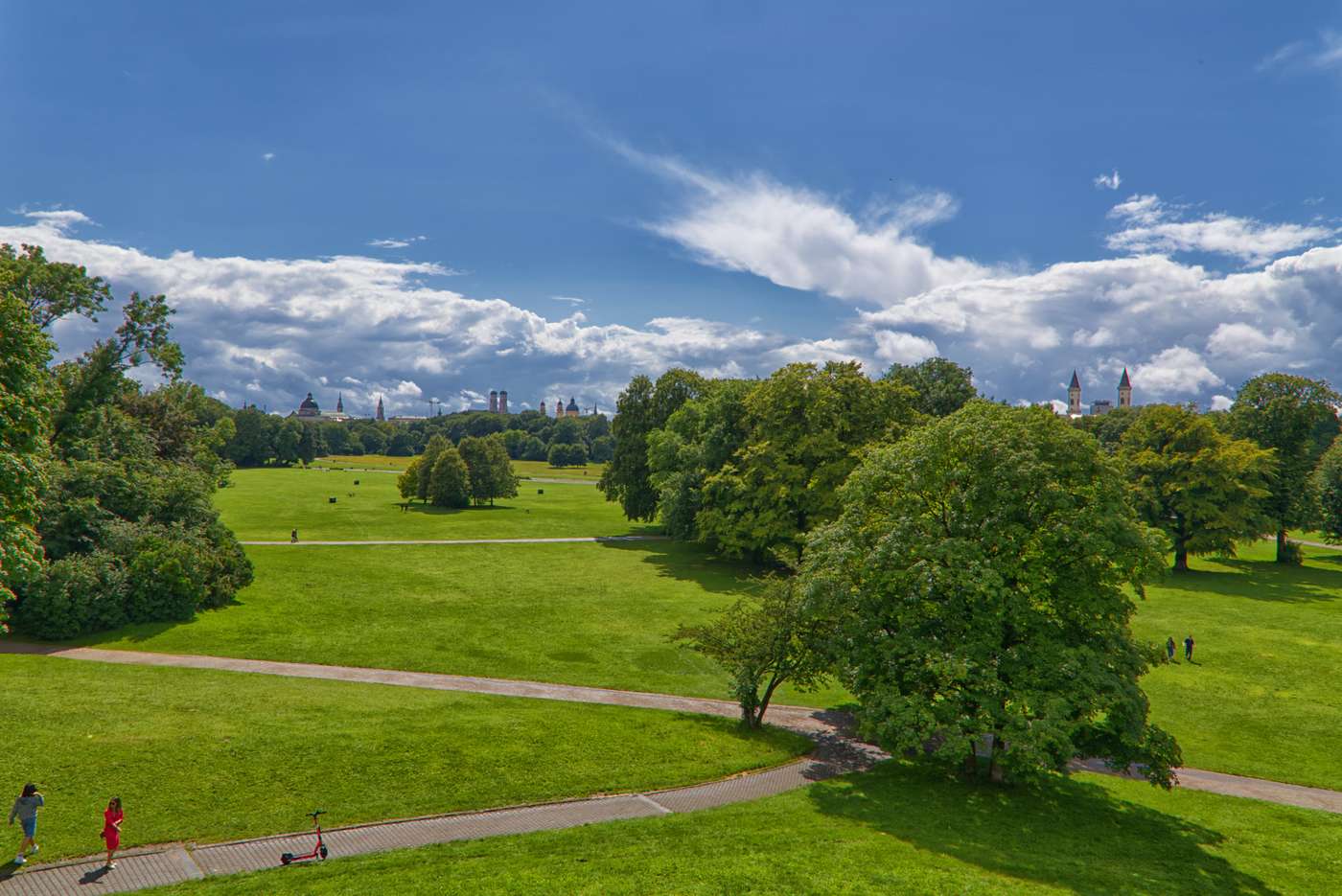
The English Garden - One of the world's biggest city parks, larger than New York's Central Park, with beer gardens and surfers on the Eisbach wave.
The Residenz - Germany's largest city-centre palace, home to Bavaria's rulers for centuries, with the Hofgarten next door.
Oktoberfest - The world's biggest folk festival, back on the Theresienwiese from 18 September to 3 October 2027.
Viktualienmarkt - Munich's open-air food market, trading for more than 200 years, with a beer garden in the middle.
BMW Welt - A free-to-enter showroom for the latest cars and motorbikes, with the BMW Museum next door.
☀️ Good to Know for your Munich holidays
☀️ Munich gets around 1,700+ hours of sunshine a year, with summer highs around 24°C and winter dipping close to freezing. Pack layers, this one’s got seasons
💶 Germany uses the Euro, and Munich leans a little pricier than other German cities. Expect €4–6 for a beer, €12–20 for a decent meal, and solid public transport options with day passes available
🎵 Beer gardens are a way of life here. Locals bring their own food, order a litre stein, and settle in for hours, especially in spots like the English Garden.
A holiday in Munich is perfect for you if...
You want beer gardens, palaces and a day trip to the Alps in one long weekend.
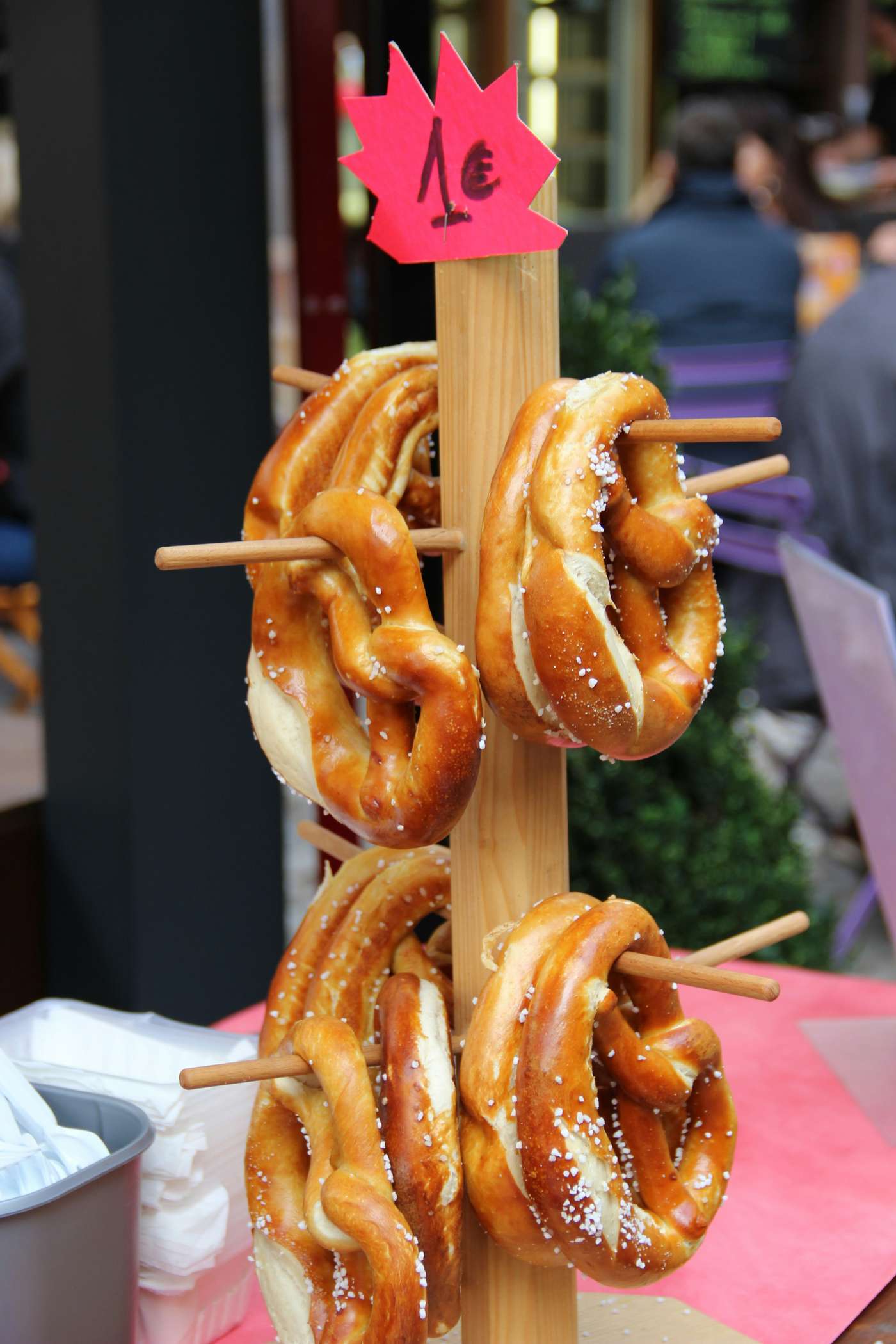
You like your city break with a litre of beer and a pretzel the size of your head.
You want a park big enough to get lost in (with surfers in the middle of it).
You've always wanted to see a fairytale castle up close.
You're planning around Oktoberfest, a Christmas market, or both.
🗣️ Local Lingo – Talk Like a Bavarian 🇩🇪
In Munich, you’ll hear German with a Bavarian twist, don’t be surprised if it sounds a bit different! A few phrases will go a long way.
Servus, ZAIR-voos, Hello / Goodbye (Bavaria's all-purpose greeting)
Grüß Gott, groos GOT, Good day (the polite Bavarian hello)
Danke, DAHN-kuh, Thank you
Bitte, BIT-tuh, Please / You're welcome
A Mass, bitte, ah MAHSS BIT-tuh, A litre of beer, please
A Brezn, bitte, ah BRETS-n BIT-tuh, A pretzel, please
Prost!, PROHST, Cheers!
Oans, zwoa, g'suffa!, OH-ins, TSVOH-ah, guh-ZOO-fah, One, two, drink up! (the beer-tent toast)
Best Day Trips on your Munich holidays
Munich’s location in southern Germany makes it perfect for exploring Bavaria and beyond. Castles, lakes, and alpine views? Go on then.
Neuschwanstein Castle – straight out of a Disney film, this iconic castle is a must-see
Lake Starnberg – a dreamy lakeside escape just 30 minutes away
Salzburg – Mozart’s birthplace and Sound of Music scenery, just over the border
Zugspitze – Germany’s highest peak with jaw-dropping alpine views
Nuremberg – medieval streets, history, and famous Christmas markets
🏨 Where to Stay on your Munich holidays
💑 For Couples
Altstadt – the historic heart of Munich. Think cobbled streets, beer halls, and romantic strolls past landmarks and churches.
👨👩👧👦 For Families
Schwabing – leafy, relaxed, and right by the English Garden. Great for space, parks, and easy exploring.
👯♂️ For Groups
Ludwigsvorstadt-Isarvorstadt – close to Oktoberfest, buzzing nightlife, and plenty of bars to keep things lively.
🏨 Best Hotels in Munich
Whether you're after boutique charm, family-friendly comfort, or something a bit boujee, Munich’s got the lot.
💑 Which hotels are best for couples on a Munich city break?
Andaz Munich Schwabinger Tor. Near the English Garden, with a pool, a spa looking out to the Olympic Park and M'Uniqo, which bills itself as Munich's highest rooftop bar.
Hotel Muenchen Palace. A boutique hotel with its own garden and roof terrace, the Palace Bar, La Grenouille restaurant and a sauna for lazy afternoons.
Ruby Lilly Hotel. A design hotel a short walk from the main station, with a rooftop terrace and a bar that never closes.
👨👩👧👦 Which hotels are best for a family holiday in Munich?
Sofitel Munich Bayerpost. Family connecting rooms and a spa with a heated spiral pool, 100 metres from the main station.
Novotel Muenchen City. A pool and sauna for the end of the day, with the Deutsches Museum a short walk away.
Schiller 5 Hotel & Boardinghouse. Rooms with kitchenettes and a two-room suite with a full kitchen, round the corner from the main station.
🎉 Which hotels are best for a group's Munich city break?
Schwan Locke. Studios with kitchens and a courtyard, close to the main station and walking distance from the Oktoberfest grounds.
Novotel Muenchen City Arnulfpark. A sun terrace at the FLAVE bar and restaurant, plus a sauna, a few steps from the Circus Krone.
💰 What are the best cheap hotels in Munich?
Holiday Inn Express Munich City West. Breakfast included, next to the Hirschgarten S-Bahn stop and the Hirschgarten beer garden.
ibis Muenchen City Arnulfpark. A sunny breakfast terrace and a 24-hour bar, at a price that leaves more for the beer gardens.
✨ What are the best 5-star hotels in Munich?
The Charles Hotel. Rocco Forte's Munich hotel, with a pool and spa, family rooms and the Florio restaurant looking over the Old Botanical Garden.
Hotel Vier Jahreszeiten Kempinski Munich. A grand address on Maximilianstrasse, with a heated indoor pool, the Jahreszeiten Bar and chef Franz-Josef Unterlechner's Schwarzreiter restaurant.
🗺️ Munich Holidays 2026 and 2027 Travel Guide
💑 What are the best things to do on a Munich city break for couples?
The Residenz and Hofgarten: Germany's largest city-centre palace, with the arcaded Hofgarten next door for a stroll.
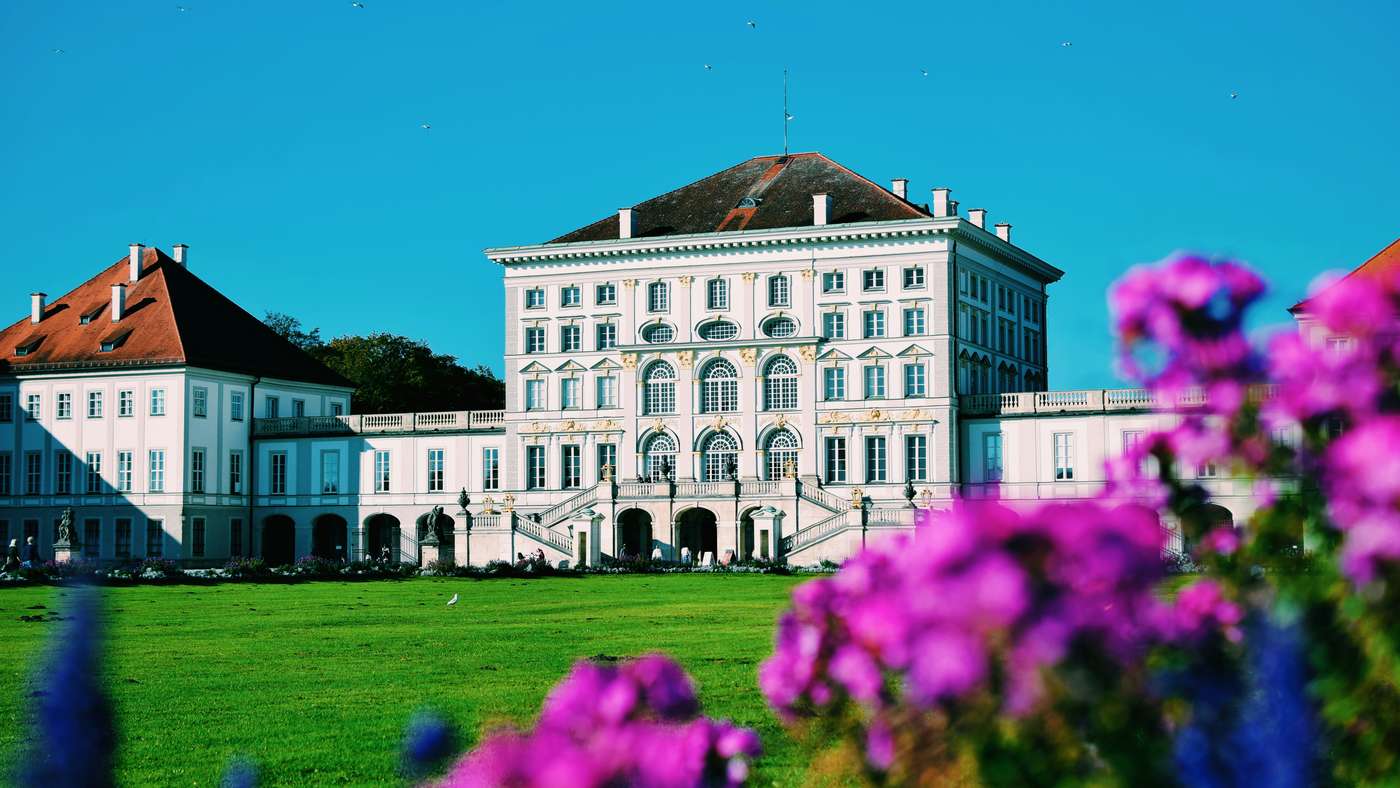
Nymphenburg Palace: The royal summer palace on the edge of town, with gardens that are free to wander.
A night at the opera: The Bavarian State Opera puts on around 450 performances a season at the National Theatre.
Isar river walks: The Isar runs for almost 14km through the city, with paths on both banks and places to cool off in summer (swim only where it's allowed).
👨👩👧👦 What are the best things to do on a family holiday in Munich?
Hellabrunn Zoo: The world's first "geo-zoo", with animals grouped by continent across 40 hectares by the Isar.
Deutsches Museum: One of the world's biggest science and technology museums. It's being modernised until 2028, so a few areas may be closed on the day.
BMW Welt: Free to wander, with the latest cars and motorbikes on show.
Olympiapark: Space to run, a lake and the 1972 Olympic venues (the Olympic Tower is closed for renovation until early 2027).
🎉 What are the best things to do in Munich with a group of friends?
Hofbrauhaus: Munich's most famous beer hall, pouring on Platzl since 1608.
Allianz Arena: Catch FC Bayern in front of 75,000 fans, or take the stadium tour.
The Eisbach wave: Watch the surfers on the standing wave at the edge of the English Garden, surfable again since May 2026 (experienced surfers only).
Bahnwärter Thiel: Part club, part open-air hangout near the old slaughterhouse, with concerts, parties and even a flea market.
🍴 Where should foodies eat on a Munich holiday?
Viktualienmarkt: Munich's food market, trading for more than 200 years and open Monday to Saturday.
Weisswurst breakfast: The white sausage is traditionally eaten before noon, with sweet mustard, a pretzel and a wheat beer.
JAN: Jan Hartwig's restaurant holds three Michelin stars.
Tantris: A Munich legend with two Michelin stars, in a building that's a 1970s design icon.
🌍 More Destinations to Explore
Berlin - History at every turn, from the Berlin Wall to Museum Island, plus buzzing nightlife.
Hamburg - Maritime vibes, canals, the famous Reeperbahn and fresh seafood.
Cologne - A Gothic cathedral, Rhine river cruises and carnival celebrations.
Leipzig - Bach's city, with a big music heritage and a lively arts scene.
Nuremberg - A medieval old town, a hilltop castle and one of Germany's most famous Christmas markets.
Salzburg - Mozart's birthplace, with baroque domes and Sound of Music scenery.
Popular Munich hotels
More Munich hotelsWeather in Munich
JAN
FEB
MAR
APR
MAY
JUN
JUL
AUG
SEP
OCT
NOV
DEC
During the winter months, from December to February, Munich becomes a frosty wonderland with temperatures often lingering around the freezing point, 0°C. Think 'walking in a winter wonderland' vibes, so bring your warmest clothes. As we hop into spring, from March to May, Munich's climate plays a bit of a guessing game. Starting off with a crisp 5°C in March, it gradually warms up to a pleasant 15°C by May. This season is all about those stylish layers! Summertime, from June to August, is when Munich really shines. The city basks in a comfortable 20°C to 25°C range. As autumn rolls in from September to November, the temperature begins its graceful descent. It starts at a mild 18°C (64°F) in September and dips to a cooler 6°C (43°F) by November, setting the stage for cosy cafes and autumnal hues.
View destination on a map
View destination on a map
FAQs
How long does it take to fly to Munich?
How long does it take to fly to Munich?
Flights from the UK to Munich take between 1 hour 50 minutes and 2 hours 15 minutes depending on your departure airport, making it one of the shortest long-haul European city break flights from Britain. All flights land at Munich Airport (MUC), officially Franz Josef Strauß International, located 29km northeast of the city centre and well connected by S-Bahn in around 40 minutes.
Route | Flight time | Airlines |
London Heathrow to Munich | approx. 1h 55m | British Airways, Lufthansa |
London Gatwick to Munich | approx. 2h 00m | easyJet |
London Stansted to Munich | approx. 2h 00m | Ryanair, Lufthansa |
London Luton to Munich | approx. 2h 05m | easyJet |
Manchester to Munich | approx. 2h 15m | Lufthansa, easyJet |
Edinburgh to Munich | approx. 2h 30m | Lufthansa |
Birmingham to Munich | approx. 2h 10m | Lufthansa |
With over 300 weekly flights from London alone, Munich is one of the most frequently served European city break destinations from the UK. The sheer frequency of services means flexibility on dates nearly always pays off.
What's the time difference between the UK and Munich?
What's the time difference between the UK and Munich?
Munich follows Central European Time (CET, UTC+1) in winter and Central European Summer Time (CEST, UTC+2) in summer. Germany changes its clocks at the same time as the UK, which means Munich is always exactly 1 hour ahead of the UK and Ireland, all year round, no exceptions.
Summer (late March–late October): UK (BST, UTC+1) vs Munich (CEST, UTC+2). Munich is 1 hour ahead.
Winter (late October–late March): UK (GMT, UTC+0) vs Munich (CET, UTC+1). Munich is still 1 hour ahead.
Consistent, straightforward and worth a quick mental note when booking restaurant tables or planning your first day.
What language do they speak in Munich?
What language do they speak in Munich?
German is the official language of Munich and Bavaria. More specifically, many locals speak Bavarian, a distinct dialect of German that can sound very different from the standard High German (Hochdeutsch) taught in schools and spoken on national media. You'll hear it in beer halls, markets and among older generations, and it's part of what gives Munich its distinct character compared to cities like Berlin or Hamburg.
English is widely spoken in hotels, tourist attractions, restaurants and shops throughout the city centre, you'll have no difficulty communicating in English as a visitor. Away from the tourist areas, a few words of German open doors considerably.
Useful German phrases for Munich
English | German | Bavarian equivalent | Sounds like |
Hello | Hallo | Servus / Grüß Gott | Sehr-voos / Groos Got |
Thank you | Danke | Vergelt's Gott | Dan-keh |
Please | Bitte | Bitte | Bit-teh |
Cheers! | Prost! | Prost! | Prohst |
One beer please | Ein Bier bitte | A Maß bitte | Ein Beer Bit-teh |
The bill please | Die Rechnung bitte | D'Rechnung bitte | Dee Rech-noong Bit-teh |
Excuse me | Entschuldigung | Entschuldigung | Ent-shool-dee-goong |
The Bavarian greeting Servus (pronounced Sehr-voos) is used for both hello and goodbye, a small detail that signals genuine engagement with the local culture rather than tourist-mode German.
What Is The Best Time To Visit Munich?
What Is The Best Time To Visit Munich?
Munich rewards visitors all year but the experience changes significantly by season and one event dominates the calendar so completely that it deserves its own section.
May–June: The sweet spot for most visitors. Beer gardens open for the season, temperatures hit a pleasant 18–24°C, crowds are manageable and hotel prices are 30–40% below summer peaks. The English Garden fills with locals and the city feels genuinely alive without being overwhelmed.
July–August: Peak summer. Warm and sunny, long daylight hours, outdoor festivals and open-air cinema. The most expensive months for accommodation outside Oktoberfest, but also the most reliably good weather. Book ahead.
September–early October (Oktoberfest): The city transforms entirely, see below. Accommodation prices double or triple and sell out months in advance. If Oktoberfest is the reason you're going, plan at least 6 months ahead. If it isn't, avoid these dates entirely.
November–March: Off-season and genuinely underrated. Christmas markets from late November are world-class, the Christkindlmarkt on Marienplatz is one of the finest in Europe. January and February are cold but cheap, quiet and atmospheric. Museum entry on Sundays drops to €1.
April: Shoulder season, decent weather building, beer gardens just opening, crowds manageable and prices reasonable. A good option for a first visit.
Best time by priority
Priority | Best months |
Best weather and value | May–June |
Oktoberfest | 19 September–4 October 2026 |
Christmas markets | Late November–24 December |
Budget travel | January–February, November |
Avoid (unless for Oktoberfest) | Mid-September to early October |
What Is Oktoberfest and How Do I Visit?
What Is Oktoberfest and How Do I Visit?
What is Oktoberfest and how do I visit?
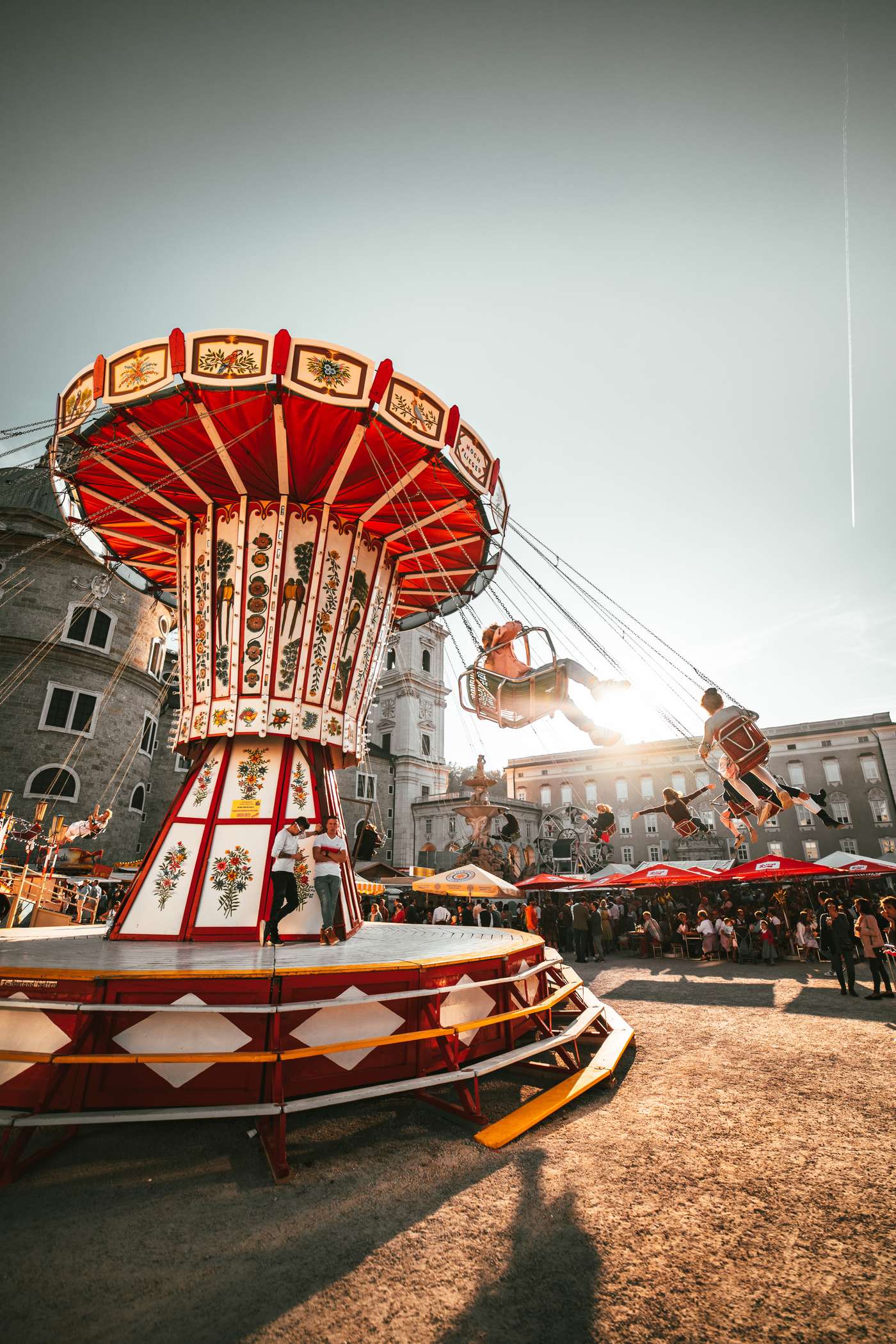
Oktoberfest is the world's largest folk festival, 16 days of Bavarian beer, food, traditional costume, fairground rides and live brass bands that draws over six million visitors to Munich every autumn. Despite the name, most of it takes place in September. Oktoberfest 2026 runs from Saturday 19 September to Sunday 4 October, on the Theresienwiese, a large open meadow about 1km from the city centre, reachable in 10 minutes on the U-Bahn to Theresienwiese station.
The essentials
Entry: Free. No ticket needed to enter the festival grounds.
Beer tents: 14 large tents and around 20 smaller ones, each with a different brewery, atmosphere and crowd. The Hofbräu-Festzelt is the most internationally famous. Augustiner is the local favourite. No tent requires a ticket but reserved tables are the only guaranteed way to sit and be served.
Reservations: Not mandatory but strongly recommended for Friday and Saturday evenings, when tents close due to overcrowding without reservations. Reservations open on the official Oktoberfest.de site, popular evenings sell out within hours of release, often months before the festival.
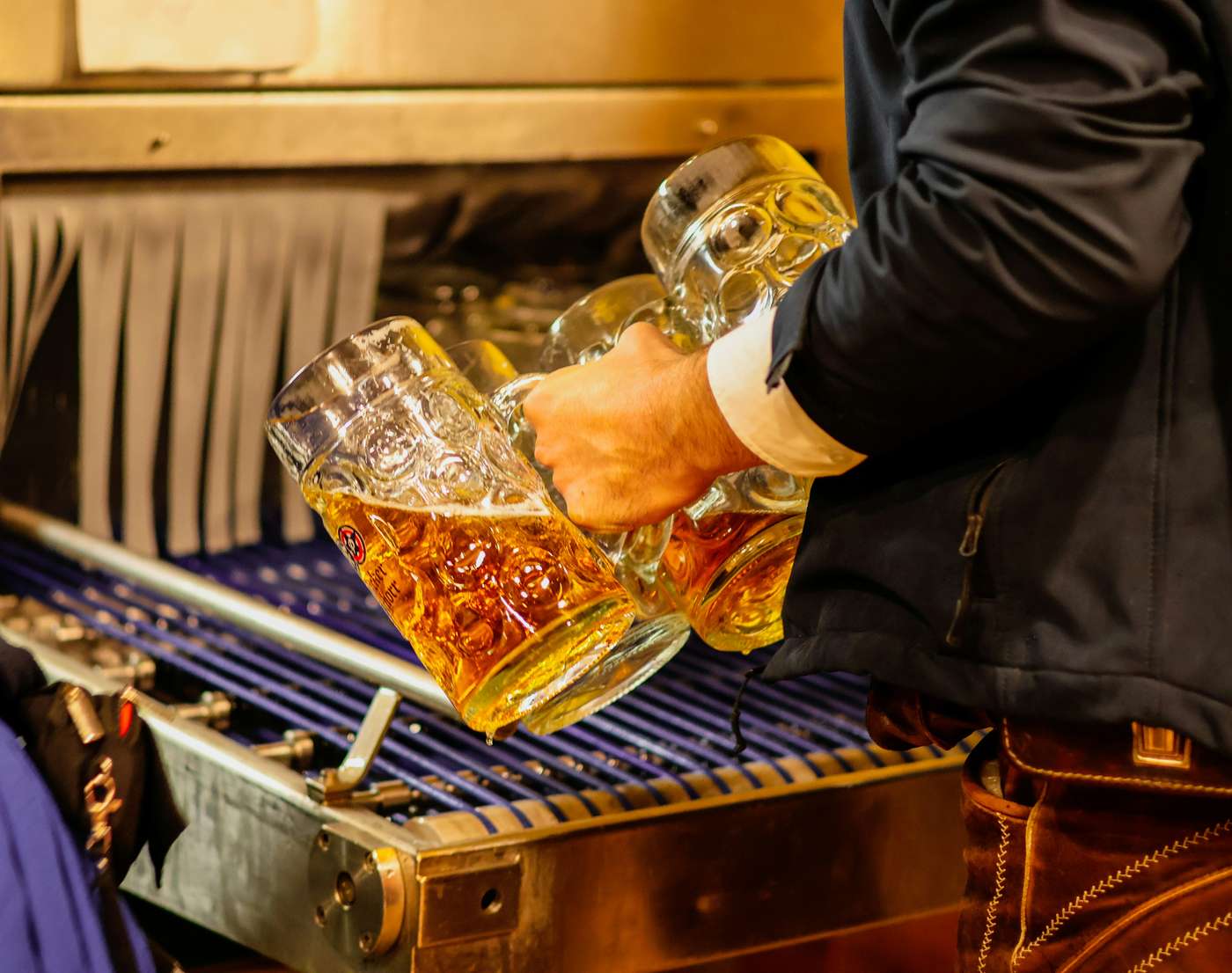
Beer: Served exclusively by the litre (a Maß, pronounced mahss). Expect to pay approximately €15–16 per litre in 2026. All beer must be brewed within Munich city limits, a rule that has held since 1810.
Food: Half chicken (Hendl), pork knuckle (Schweinshaxe), giant pretzels and Obatzda (Bavarian cheese spread) are the classics. Budget €12–25 for a main dish.
Dress: Traditional Bavarian dress, lederhosen for men, dirndl for women, is not required but widely worn and genuinely appreciated by locals as a sign of respect for the tradition. Cheap novelty Oktoberfest costumes are very obviously tourist gear; a basic quality lederhosen or dirndl set costs €80–150.
Opening ceremony: The Lord Mayor of Munich taps the first keg in the Schottenhamel tent at noon on the opening Saturday and shouts "O'zapft is!" (It is tapped!), only then does beer service begin across the entire festival.
Best days to go: Weekday mornings and early afternoons are significantly less crowded than evenings and weekends. Tuesday is Family Day with reduced ride prices.
Daily budget: €80–150 for a full day including 2–3 beers, food and rides. Expect more on weekends.
Accommodation: Book 6–12 months in advance. Hotels within walking distance of the Theresienwiese sell out first and charge 2–3 times normal rates. Staying in Dachau, Freising or Augsburg and commuting by S-Bahn is a genuinely practical and significantly cheaper alternative.
Is Munich Expensive?
Is Munich Expensive?
Munich is one of Germany's most expensive cities, significantly pricier than Berlin, Leipzig or Hamburg, but still noticeably cheaper than London or Paris for most everyday costs. The city rewards smart planning and local knowledge more than most European destinations.
Typical prices in 2026
Item | Approximate cost |
Coffee (espresso or cappuccino) | €3–€5 |
Beer at a beer garden (1 litre) | €7–€9 |
Beer at Hofbräuhaus (1 litre) | €11–€13 |
Snack (pretzel, Leberkäse roll) | €3–€5 |
Lunch at a local restaurant | €12–€20 |
Dinner at a traditional Bavarian restaurant | €20–€35 per person |
U-Bahn/S-Bahn day ticket (inner zone) | €9.20 |
Museum entry (state museums) | €7–€12 (€1 on Sundays) |
Neuschwanstein Castle entry | €17 |
Oktoberfest prices are completely different: beer rises to €15–16 per litre, hotels double or triple, and a full day at the festival comfortably costs €100–€150 per person. Outside of Oktoberfest, Munich is manageable on a mid-range budget of €120–€180 per person per day including accommodation.
Three genuinely useful money-saving tips: State museums charge just €1 admission on Sundays. Bavarian law allows you to bring your own food into beer gardens as long as you buy drinks there, the Hirschgarten is the best for a proper picnic. And the Viktualienmarkt food stalls offer some of the best and most authentic eating in the city at street food prices.
Do I Need a Visa To Visit Munich?
Do I Need a Visa To Visit Munich?
No you do not need a visa to visit Munich. British and Irish passport holders do not need a visa to visit Munich or anywhere in Germany. Germany is part of the EU's Schengen Area, and UK citizens can visit for up to 90 days in any 180-day period without any visa requirement.
One thing to be aware of is ETIAS, the European Travel Information and Authorisation System, which will require UK travellers to register before visiting Schengen Area countries including Germany. It is not a visa, costs €7 and is valid for three years once approved. Check the current launch status at etias.com before booking as implementation has been subject to delays. Ensure your passport is valid for the full duration of your stay, Germany strictly enforces the requirement for a passport valid for the length of visit.