
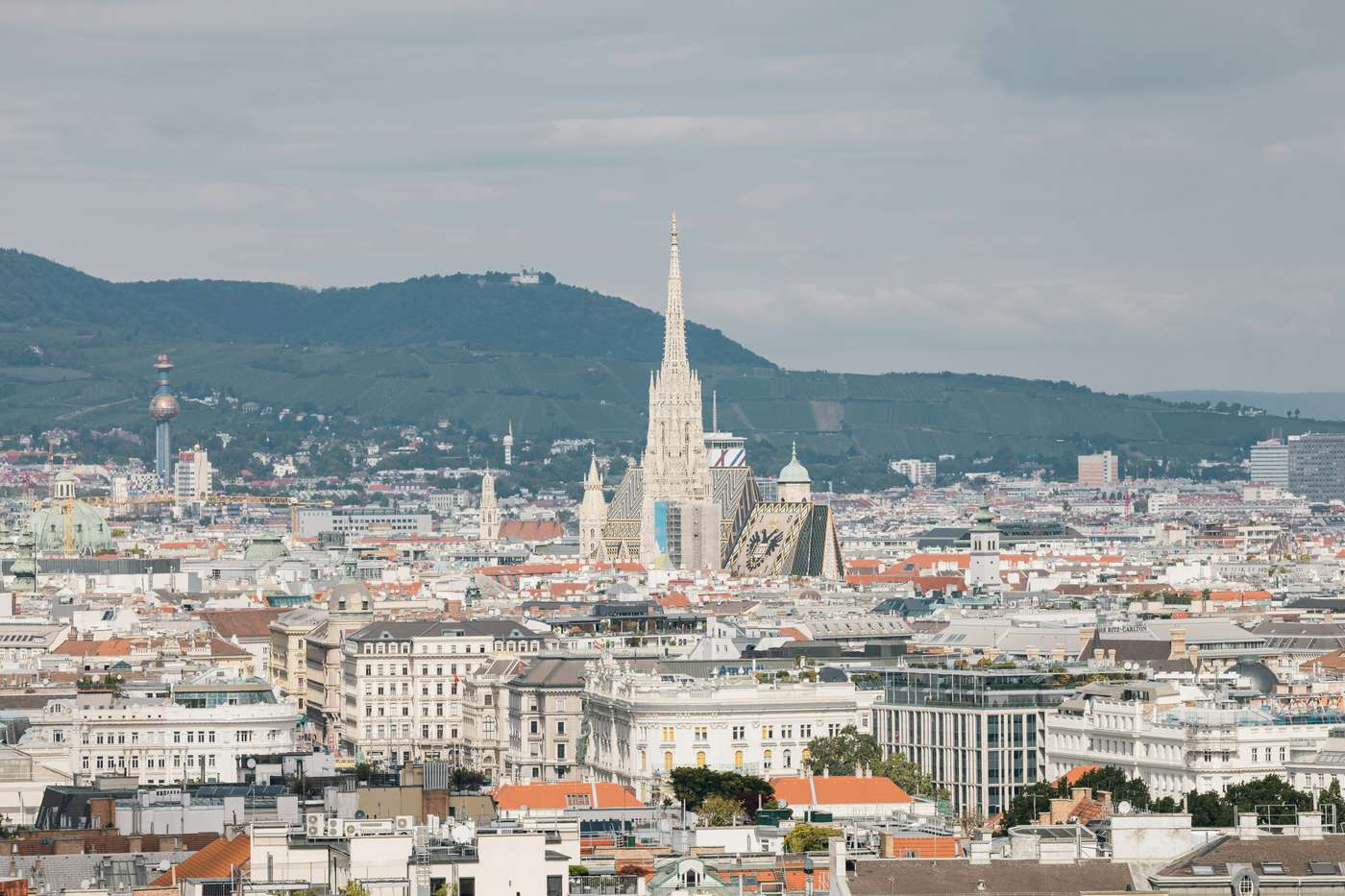
Vienna is the city break that makes you feel fancier just for turning up: imperial palaces, coffee houses that treat cake as a civic duty, and a classical music scene that more or less invented the genre. Then in November the whole place turns into a Christmas market and you book again before the mulled wine is finished.
Highlights of your holidays to Vienna 2026 and 2027
Palace perfection. Schönbrunn and the Hofburg are two of Europe's great royal residences, and you can do both in a day if you start early.
Café culture. Vienna more or less invented the coffee house, and the good ones still expect you to stay for two hours. Order a Melange and a slice of Sachertorte and settle in.
Music capital. Mozart, Beethoven, Strauss and Mahler all worked here. The State Opera and the Musikverein still run one of the densest concert calendars in the world, though the Opera goes dark through July and August.
Christmas markets. From early November the city fills with them. Rathausplatz is the big one, Schönbrunn runs right through to January, and Belvedere and Spittelberg are the ones locals actually rate.
The Prater. The Giant Ferris Wheel has been turning since 1897 and the view over the rooftops from the top is properly special. The park around it is free and enormous.
Good to Know for your Vienna holiday
☀️ Weather - Summers hit 25-30°C with long, warm evenings. Winters drop to 0-5°C with crisp cold and occasional snow. Spring and autumn sit around 15-22°C, brilliant for walking the city without melting or freezing.
💶 Money - A pint of beer runs about €7 in the centre, a main course at a restaurant around €13-17, and a coffee with cake in a traditional café will set you back roughly €10-13. Not cheap, but not London prices either.
🏛 Fun Fact - Vienna's tap water comes straight off the Alps. Two pipelines built in 1873 and 1910 carry it from the Schneeberg, the Rax and the Hochschwab, and it runs the whole way downhill by gravity with no pumps at all. It is why the café water alongside your coffee is free and better than the bottled stuff.
Making the most of your holiday to Vienna
"The best thing we did was get the tram out to the central cemetery (the Zentralfriedhof), which doesn't sound like a great advert for the city but Beethoven, Schubert, Brahms and Johann Strauss are buried in one semicircle, close enough that you can stand in the middle and see all four. I'm not even a massive fan of classical music but seeing their graves, then listening to their music all weekend, thinking about the way these people are remembered for these amazing pieces of music, was just really moving. One more tip. Get a Käsekrainer (smoked sausage) at the Bitzinger stand on Albertinaplatz. It is a fast food stall which is open until four in the morning and it sells champagne, which tells you most of what you need to know about Vienna."
-Rob Brooks, OtB Holiday Expert
A holiday in Vienna is perfect for you if...
You want a city break that feels like an occasion on any day at all
You would rather spend two hours having coffee and cake than queue for anything
You are going for the Christmas markets, and you want the city that does them best rather than the one that does them cheapest
You want Prague's grandeur with better food, or Budapest's culture without the stag parties
You like the idea of an opera house, a ferris wheel and a vineyard all being on the same metro line
Top Vienna Hotels 2026 and 2027
The best hotels in Vienna cover everything from five-star palaces to solid mid-range picks right in the centre. You can browse the full range of Vienna hotels or check out some of our favourites below.
💑 Where should couples stay on a Vienna city break?
Steigenberger Icon Herrenhof. Five-star in the 1st district, steps from the Hofburg and the Graben, with a spa and proper Viennese dining at Béla Béla.
Hotel Kaiserhof Wien. A family-run four-star in the 4th district, with a big breakfast, a sauna and steam bath, and the kind of welcome that keeps people coming back.
Austria Trend Hotel Europa. Four-star on Kärntner Strasse, Vienna's most elegant shopping street, with St Stephen's and the Opera practically on the doorstep.
👨👩👧👦 What are the best family hotels for a Vienna city break?
BASSENA Wien Messe Prater. Four-star right beside the Prater and the Giant Ferris Wheel, with spacious rooms and an evening tapas menu. Two minutes from the funfair is a powerful thing at the end of a long day.
City Central Hotel. A budget-friendly four-star five minutes from the centre, with family rooms and apartments and a complimentary breakfast buffet.
Four Points Flex by Sheraton Vienna Hauptbahnhof. Modern and comfortable, 500 metres from the Belvedere, with the main station three minutes away for day trips. Formerly the Austria Trend Hotel Beim Theresianum.
✨ What are the best luxury hotels in Vienna?
Hotel Sacher Wien. The five-star icon opposite the State Opera, home of the Original Sacher-Torte, with a full spa and individually decorated rooms dripping in old-world glamour. If you are splashing out in Vienna, this is the one.
Grand Hotel Wien. Five-star on the Ringstrasse, three minutes from the Opera, with a full-service spa and three restaurants. Proper old-school Viennese luxury.
🎉 What are the best Vienna hotels for a group weekend break?
IntercityHotel Wien. Four-star near the Westbahnhof with modern rooms and excellent transport links, and a breakfast buffet that gets everyone moving.
Austria Trend Hotel Savoyen. A big, bright four-star with a glass-roofed atrium and a spa with sauna and steam bath, a short walk from the Belvedere. Plenty of room for everyone.
💰 What are the best cheap hotels in Vienna?
Austria Trend Hotel Ananas. Four-star beside the Naschmarkt, with an on-site restaurant, gluten-free breakfast options and rooms that punch above their price.
Donauwalzer. Family-run, themed rooms, live music on Sundays. Loads of character and genuinely good value.
Must See in Vienna
Vienna's not short on things to gawp at. Here are the highlights you really shouldn't miss on your Vienna holidays.
Schönbrunn Palace. The Habsburgs' summer place and a UNESCO World Heritage Site with formal gardens, a maze, the world's oldest continuously operating zoo and the Gloriette on the hill above. The room count is 1,441, and the tours cover a fraction of them. Book before you go rather than on the day, and budget a full morning. The gardens themselves are free.
St Stephen's Cathedral. Vienna's most recognisable landmark, right in the middle. The south tower is 136 metres and you can climb the 343 steps for the view; the north tower has a lift up to the Pummerin bell. The roof tiles form a zigzag mosaic that is worth walking round the block for.
Belvedere Palace. Two baroque palaces linked by formal gardens, with Klimt's The Kiss in the Upper Belvedere. You need a timed ticket for the palaces, but the gardens are free and gorgeous year-round.
The Prater and the Giant Ferris Wheel. The funfair has been going since 1897 and the Riesenrad lifts you 65 metres for a view over the whole city. Entry to the park is free and you pay per ride.
The Hofburg Imperial Palace. The Habsburgs' winter residence, home to the Imperial Apartments, the Sisi Museum and the Spanish Riding School. Note the Riding School takes a summer break of about five weeks from late June, with the exact dates moving each year.
The Vienna State Opera. One of the world's great opera houses, and the building alone is worth the walk past. Standing places are the great Vienna bargain, released online at ten in the morning on the day of the performance. One thing to be aware of before you build a trip around it: the Opera is closed for performances through July and August, though guided tours run all year.
Where to Stay in Vienna
👨👩👧👦 Where should families stay on a Vienna short break?
Vienna City centre keeps everything walkable, but families with young kids might prefer being near the Prater area - the funfair, the park and Haus des Meeres (the aquarium in a WWII flak tower, which is as cool as it sounds) are all right there. Easy metro access back to the sights when you need it.
💑 Where should couples stay for a Vienna weekend break?
The Innere Stadt (1st district) is where the magic is - you've got the Opera House, Hofburg, Graben shopping street and the best coffee houses all within a few minutes' walk. The MuseumsQuartier area is brilliant too, with galleries, wine bars and a younger, artsier vibe.
👯 Where should groups stay in Vienna for nightlife?
Base yourselves near Schwedenplatz or the Bermuda Triangle (yes, that's what they call it) for the best nightlife concentration. Traditional beer halls, cocktail bars and clubs all within stumbling distance of each other. The Naschmarkt area is also great for groups who like their food.
🗣️ Local Lingo
German is the official language, and Viennese German has its own particular charm. English is widely spoken in the tourist areas, but a few local phrases go down very well indeed.
Grüß Gott, groos GOT, Hello. Literally "God greets you", and far more common in Austria than Hallo
Bitte / Danke, BIT-uh / DAN-kuh, Please / Thank you
Ein Bier, bitte, ine BEER BIT-uh, One beer, please
Einen Melange, bitte, IGH-nen may-LAHNZH BIT-uh, One Melange, please. Vienna's signature coffee, like a cappuccino but smoother
Zahlen, bitte, TSAH-len BIT-uh, The bill, please. What Viennese people actually say
Passt schon, past SHOAN, Keep the change. The polite way to tip
Pfiat di, FEE-at dee, Goodbye, informal Viennese dialect, and you will hear it everywhere
Prost!, PROHST, Cheers
Vienna city breaks
City breaks to Vienna are perfect for a long weekend. The Ringstrasse loops the historic core in about an hour on foot, almost everything you have come to see sits inside it or one metro stop beyond, and the U-Bahn runs through the night on Fridays and Saturdays. Most people stay three nights and usually find that's the right length of time: a palace day, a museum-and-coffee day, and a day that ends at a Heuriger in the hills with a glass of Grüner Veltliner.
Two nights works if you choose what you want to do a bit more carefully. Schönbrunn takes a morning on its own, so pair it with the Belvedere and The Kiss on day one, then keep day two for the Innere Stadt, the cathedral tower and as many coffee houses as you can reasonably justify. Four nights gets you the Prater, the Naschmarkt on a Saturday when the flea market is on, and a day trip.
The season shapes the trip more than in most cities. November and December are peak Vienna: the Christmas markets open in early November and the Rathausplatz one runs to Boxing Day, with Schönbrunn going right through to 6 January. January and February are ball season, more than 450 of them, culminating in the Opera Ball. April to June and September to October give you the best weather and the thinnest crowds. July and August are warm and lively but the State Opera is dark and the Spanish Riding School is on its summer break, so build the trip around the Prater, the parks and the Danube instead.
One practical thing that saves a lot of bother for a weekend break to Vienna. Buy a 24-hour transport ticket or a Vienna City Card rather than singles, and (note the old 48-hour and 72-hour passes were withdrawn at the start of 2026).
Vienna Holidays 2026 and 2027 - Travel Guide
👨👩👧👦 What are the best things to do in Vienna on a family city break?
Vienna Zoo, in the grounds of Schönbrunn, is the oldest zoo in the world, founded in 1752 and recognised as such by Guinness. Pandas, elephants, polar bears and a rainforest house. Combined tickets with the palace are good value.
Haus des Meeres is an aquarium and tropical house built into a wartime flak tower, with sharks, crocodiles and a rooftop café looking out over the city. The building alone is a conversation starter.
The Prater has a ghost train, dodgems, roller coasters and a miniature railway beyond the famous wheel. Entry to the park is free and you pay per ride.
The Schönbrunn Children's Museum lets kids dress up in imperial costume and find out what growing up as a Habsburg involved. The maze and labyrinth in the gardens are next door for burning off what is left.
A Danube cruise is the restful option, and several operators run daytime trips that stop at the Danube Island, which has playgrounds and swimming spots in summer.
💑 What are the best things for couples to do on a Vienna city break?
The Belvedere at golden hour. Time it for late afternoon light on the gardens, see The Kiss inside, then find a Heuriger nearby for a glass as the sun goes.
A Fiaker ride. Touristy, absolutely. Romantic, also yes. A horse-drawn carriage through the Innere Stadt or along the Ringstrasse is old-school Vienna and worth the mild embarrassment.
An evening at the State Opera. Dress up and go, even if opera is not usually your thing, because the room is the event. Standing places are released online at ten on the morning of the performance and are the best value in the city. Note the Opera is closed through July and August.
A Heuriger evening. Head out to Grinzing or Neustift am Walde for the traditional wine taverns, where local wine comes with a cold buffet and you sit in the garden watching the light go over the vineyards. These are inside the city boundary, which is a genuinely unusual thing for a European capital.
🎉 What are the best things to do in Vienna for a group weekend break?
The Bermuda Triangle. The bars around Schwedenplatz are Vienna's unofficial nightlife headquarters. Start at a traditional Beisl, work through the cocktail bars, finish somewhere playing music at an unreasonable hour.
The Naschmarkt. Vienna's biggest market, with well over 100 stalls running from Austrian cheese to Middle Eastern mezze, plus bars along its length. Go on a Saturday for the flea market alongside it, and know that the stalls are closed on Sundays, when only the restaurants open.
Escape rooms. Vienna has an unusually good scene, with detective, horror and historical themes across the city.
The Danube Tower. At 252 metres it is the tallest structure in Austria, with a revolving restaurant and a café at the top and a 360-degree view. Good for a group photo and a drink before dinner.
More Destinations
🇦🇹 More Austria
Salzburg - Mozart's birthplace, Sound of Music filming locations, and a gorgeous old town dominated by the Hohensalzburg Fortress. About three hours by train from Vienna and well worth a few days.
Innsbruck - Alpine city with a compact medieval centre, world-class outdoor activities and a cable car that takes you from the high street to the mountain peaks in 20 minutes.
🌍 Nearby City Breaks
Budapest - Thermal baths, ruin bars, Danube views and some of the best-value good food in Europe.
Bratislava - Compact, affordable and full of quirky charm, with a castle on the hill and a riverside old town.
Prague - Fairytale architecture, incredible beer culture and a castle so big it holds a world record.
Popular Vienna hotels
More Vienna hotelsWeather in Vienna
JAN
FEB
MAR
APR
MAY
JUN
JUL
AUG
SEP
OCT
NOV
DEC
Summer in Vienna is like a perfectly chilled glass of Grüner Veltliner – refreshing, vibrant, and just what you need, with temperatures hitting a comfortable 25-30°C. It’s prime time for open-air concerts, strolling through lush gardens, and soaking up the city’s lively atmosphere without getting scorched.
Spring and autumn in Vienna are all about that elegant charm, with temperatures ranging from 15-20°C. The city is awash with blooming flowers in spring and golden hues in autumn, making it ideal for leisurely walks through historic streets or sipping coffee in classic Viennese cafés.
Winter wraps Vienna in a cosy blanket of festive cheer, with temperatures dropping to 0-5°C. The city sparkles with Christmas markets, ice skating rinks, and the scent of mulled wine filling the air. It’s the perfect season to explore grand palaces or enjoy a warming bowl of goulash in a snug restaurant.
In short, summer is perfect for outdoor adventures, while winter offers a magical, festive atmosphere. Vienna is a bangin' destination no matter the season – just make sure you pack for the weather!
View destination on a map
View destination on a map
FAQs
How long does it take to fly to Vienna?
How long does it take to fly to Vienna?
It takes about 2.5 hours to fly to Vienna from the UK.
What's the time difference between the UK/Ireland and Vienna?
What's the time difference between the UK/Ireland and Vienna?
Vienna is one hour ahead of the time in the UK/Ireland.
What currency do they use in Vienna?
What currency do they use in Vienna?
The official currency of Vienna is the Euro.
What language do they speak in Vienna?
What language do they speak in Vienna?
The official language spoken in Vienna is German.
What dates will the Vienna Christmas Markets run in 2026?
What dates will the Vienna Christmas Markets run in 2026?
There are several Christmas markets across the city, with the main ones running from mid-November to late December or early Jan.
Christkindlmarkt at the Rathaus - 13 November to 26 December 2026. The big one, and the ice rink and winter market carry on to 6 January 2027
Schönbrunn Palace - 6 November 2026 to 6 January 2027, and the one to pick if you are coming between Christmas and new year
Stephansplatz - 6 November to 26 December 2026, right by the cathedral
Old Viennese Christmas Market on Freyung - 14 November to 23 December 2026, the oldest and the most traditional
Spittelberg and Karlsplatz - both 13 November to 23 December 2026, and these are the two locals rate most
Maria-Theresien-Platz - 20 November to 26 December 2026, between the two big museums
Belvedere - usually opens in mid-November, and it is moving to the other side of the lake for 2026 while the grounds are worked on, so check before you go
What are the best months to visit Vienna?
What are the best months to visit Vienna?
April to June and September to October give you the best balance of decent weather, manageable crowds and good prices. Summer (July-August) is warmest but busiest. November to December is magical if you're after Christmas markets and festive atmosphere - just wrap up warm.
Do I need to tip in Vienna?
Do I need to tip in Vienna?
Tipping around 5-10% in restaurants is standard and appreciated. In cafés, rounding up to the nearest euro is fine. Taxi drivers appreciate a small tip too.
How many days do you need in Vienna?
How many days do you need in Vienna?
Three nights covers it properly: one for Schönbrunn, which takes a morning on its own, one for the Innere Stadt and the coffee houses, and one for the Belvedere and an evening at a Heuriger.
Two nights works if you pick: Schönbrunn or the Hofburg, not both. Four buys you the Prater, the Naschmarkt on a Saturday and a day trip out to Bratislava, which is an hour by train.
What is the best way to get around Vienna?
What is the best way to get around Vienna?
The U-Bahn, and it is one of the best in Europe: five lines, everything you want inside about twenty minutes, and it runs all night on Fridays and Saturdays and before public holidays.
Buy a 24-hour ticket rather than singles if you are making more than three journeys, or look at the Vienna City Card, which bundles transport with a couple of hundred discounts. One thing to watch if you are reading older advice: the 48-hour and 72-hour transport passes were withdrawn at the start of 2026, so plan around the 24-hour and 7-day options instead.
The centre is small enough that you will walk most of it anyway. The Ringstrasse loops the historic core in about an hour on foot, and tram lines 1 and 2 run the same circuit if your legs give out.
What is the food like in Vienna?
What is the food like in Vienna?
Rich, comforting and very cake-ish.
The must-tries are Wiener Schnitzel (veal, hammered thin and fried golden), Tafelspitz (boiled beef with apple and horseradish), Kaiserschmarrn (torn, fluffy pancake with plum compote) and Sachertorte.
Figlmüller on Wollzeile is the schnitzel institution, Plachutta does the definitive Tafelspitz, and the original Sachertorte is served at Hotel Sacher Wien.
For something quick, a Käsekrainer from a Würstelstand is a rite of passage.