
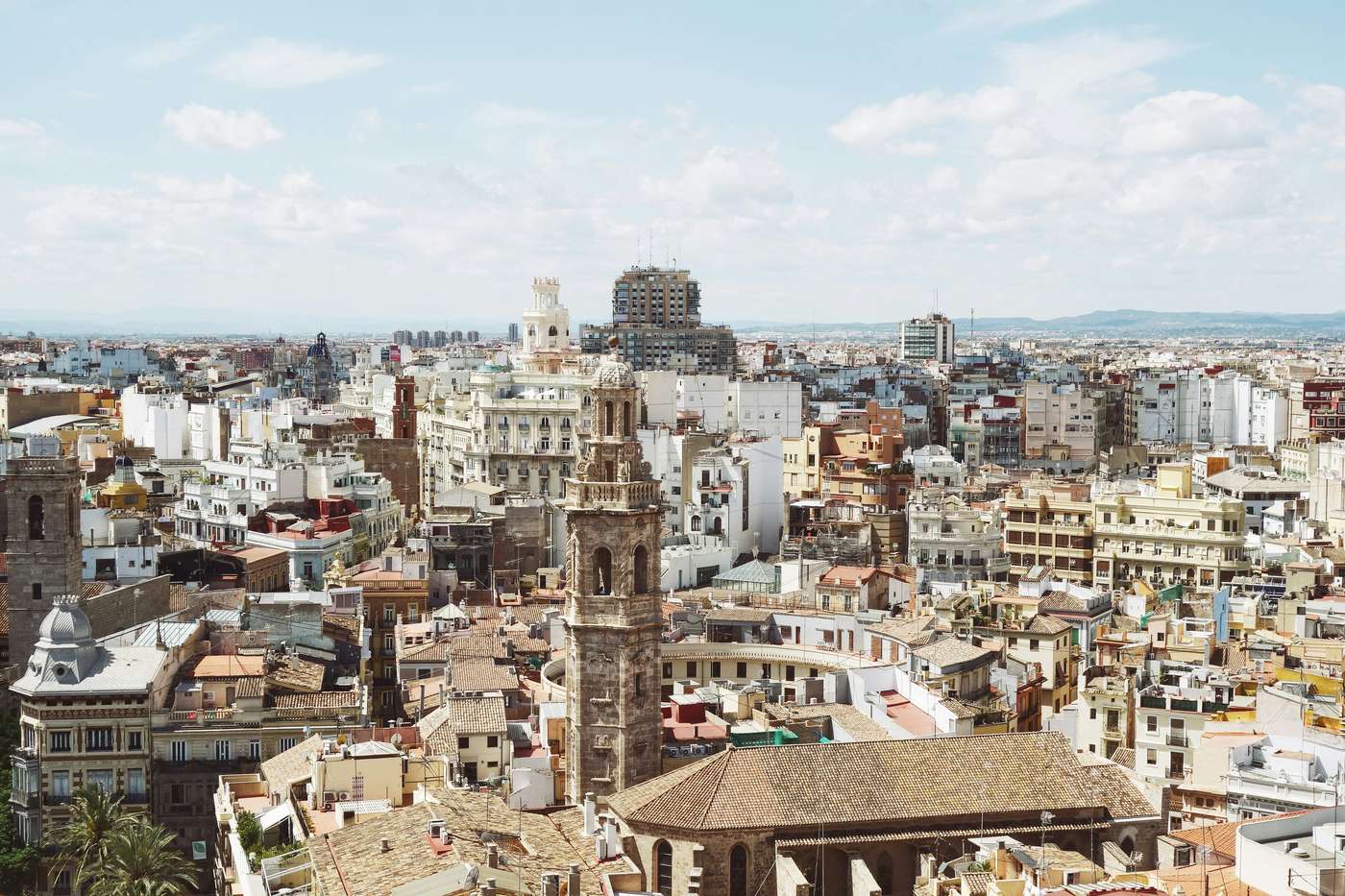
Valencia's the Spanish city that has it all – proper beaches, the birthplace of paella, jaw-dropping futuristic architecture, and that laid-back Mediterranean vibe that makes you forget what day it is. It's Spain's third-largest city but feels like a secret the rest of the world hasn't cottoned on to yet.
☀️ Good to Know
☀️ Over 2,700 hours of sunshine a year – that's 300+ days of blue skies, making it one of Europe's sunniest cities
💶 Pints from around €4, meals from €12-15 – properly affordable compared to other major Spanish cities (not mentioning any names ahem... Barcelona) so you have more cocktail money!
🥘 Birthplace of paella – this is where the real deal comes from, cooked over orange wood with bomba rice from the nearby Albufera lagoon
Top reasons to visit Valencia
City of Arts and Sciences – Santiago Calatrava's sci-fi masterpiece stretching 2km along the old riverbed, with Europe's largest aquarium (from €34)
City beaches that actually deliver – golden sand at Malvarrosa and Las Arenas, just 20 minutes from the old town
Mercado Central – one of Europe's largest and most beautiful fresh markets, in a stunning Art Nouveau building
A historic old town that’s alive and UNESCO verified – Gothic gems, markets, street life, the works.
Turia Gardens – 9km of parkland running through the city where a river used to be, perfect for cycling, running, or just lazing about
What are the top hotels in Valencia?
Valencia's hotel scene splits cleanly between historic old-town boutiques, modern high-rises near the City of Arts and Sciences, and beachfront resorts on Malvarrosa. See all Valencia City hotels or browse our picks below...
Couples
Hospes Palau de la Mar is the boutique five-star couples standout, set in a restored 19th-century palace in the upmarket Eixample quarter. Indoor freshwater pool, swanky spa centre, properly polished service. The romantic-getaway pick of the city.
INNSiDE by Melia Valencia Oceanic is the contemporary four-star option with a rooftop poolside bar, sauna and solarium. Strong reviews and a more modern aesthetic than the old-town boutiques, better fit for couples wanting design-led over historic.
Soho Boutique Turia is the smaller boutique alternative right next to the Turia Gardens, stylish design, fantastic central location, walking distance to the bars and restaurants of El Carmen. Lower review volume but very strong recent ratings.
Luxury
Las Arenas Balneario Resort is the headline five-star, beachfront on Malvarrosa with the highest review volume of any Valencia hotel. Spa heritage going back over a century, three pools, multiple restaurants. The polished beach-and-city base, especially good if you want both within walking distance.
Sh Valencia Palace is the central-Valencia five-star, walking distance to the old town, polished facilities and strong reviews across thousands of stays. The traditional city-luxury option.
Sercotel Sorolla Palace is the upper-mid-range alternative in the Eixample quarter, four-star with strong family-friendly facilities, plenty of space and a more practical feel than the historic boutiques.
Families
Rooms Ciencias is the City of Arts and Sciences family pick, literally next to the Oceanogràfic and Science Museum, three-star value with strong recent reviews, bar-restaurant open till 1am for parents wanting an after-bedtime drink.
Eurostars Gran Valencia is the upper-end family pick, four-star, bigger rooms, family-friendly facilities and an easy metro hop to the historic centre.
Senator Parque Central Hotel is the practical four-star family option near the central station, big rooms and strong review volume across thousands of family stays.
Value
Ilunion Valencia 3 is the headline value pick, three-star with poolside snack bar, game room and properly affordable pricing for budget-conscious city breaks.
Port Feria Valencia is the four-star value option with cutting-edge design and a location close to the City of Arts and Sciences.
Benetusser is the rock-bottom-budget option in Valencia's southern Benetusser district, cheaper than central hotels with a quick metro into the centre. Best for travellers prioritising price over location.
Where to Stay on your Valencia Holidays
Within the city, four neighbourhoods cover the different holiday characters.
Best for Couples
El Carmen (Old Town) is the romantic couples base, cobbled streets, boutique hotels in restored palaces, candlelit tapas bars on every corner, walking distance to the cathedral and Mercado Central. The most atmospheric Valencia, properly photogenic at golden hour.
Best for Luxury
Eixample / Pla del Real is the upmarket residential quarter just east of the old town, walking distance to the City of Arts and Sciences, with the city's polished five-star hotels and the modernist architecture along Calle Colón. The polished base if luxury matters more than location-of-the-old-town.
Best for Families
Near the City of Arts and Sciences is the family flagship, the Oceanogràfic aquarium and Science Museum a short walk away, plenty of family-friendly hotels with pools, and the Turia Gardens running right past the door for cycling. Less atmospheric than the old town but more practical for kids.
Best for Value
Malvarrosa Beach is the value alternative for travellers who'll spend most days at the beach, beachfront hotels at noticeably lower prices than the centre, a 20-minute tram into the old town when you want it. Brilliant if you're treating Valencia as a beach-and-city combination rather than pure city break.
Best Beaches
Valencia's beaches run along the eastern edge of the city and out to the surrounding coast.
Playa Malvarrosa: the headline city beach, a wide stretch of golden sand with a kilometre-long promenade lined with seafront paella restaurants and bars. Reachable by tram in 20 minutes from the centre.
Playa de las Arenas: the southern continuation of Malvarrosa with grand spa-era buildings and a more traditional seaside feel, easy access from the city centre.
Playa El Saler: part of the Albufera Natural Park about 10km south of the city, pristine sand dunes and a much more natural, quiet escape, properly different from the city beaches. Bus from the centre or rent a bike.
Port Saplaya: sometimes called "Little Venice" for the colourful apartment blocks lining its small canals, just north of the city. Smaller and quieter than Malvarrosa, properly photogenic.
Playa de la Patacona: the more local-feeling beach just north of Malvarrosa, a kilometre of clean sand with chiringuitos (beach bars) and noticeably fewer tourists than the main strip.
Local Lingo
Two languages are official in Valencia: Spanish (Castilian) and Valencian (a regional variant of Catalan). You'll get a long way with English in tourist areas, but locals warm noticeably to anyone trying Spanish, and even more if you try a Valencian phrase. A handful of useful ones:
Hola, OH-la (Hola), Hello
Gracias, GRA-thee-as (Gracias), Thank you
Por favor, por fa-VOR (Por favor), Please
Una cerveza, por favor, OO-na ther-VAY-tha por fa-VOR (Una cerveza, por favor), A beer, please
Bon dia, bon DEE-a (Bon dia, Valencian), Good morning (using this earns proper local-respect points)
Travel Guide for your holidays to Valencia 2026 / 2027
Families
Oceanogràfic at the City of Arts and Sciences: Europe's largest aquarium, with shark tunnels, beluga whales, dolphins and over 500 species across themed habitats. The full day-out family attraction.
Cycle the Turia Gardens: rent bikes or use the city's Valenbisi public-hire scheme and ride the full 9km of the old riverbed park, playgrounds and cafes along the way. Even small kids manage the full route on a tag-along.
Bioparc Valencia: the immersive open-air zoo with no visible cages, animals separated from visitors by hidden barriers, properly engaging way to see African wildlife without a 12-hour flight.
Mercado Central food tour: the modernist food market is a sensory adventure for kids, stalls selling jamón, cheeses, fruit, pastries, and lunch at one of the bar counters is properly affordable. The horchata stand at Mercado Colón nearby is the local favourite.
Albufera Natural Park boat trip: half-day excursion to the freshwater lagoon south of the city where the rice for paella is grown, traditional flat-bottomed boat trips at sunset, plus a proper lunch at one of the village restaurants in El Palmar.
Couples
Sunset at the Miguelete bell tower: climb the 207-step spiral staircase of the cathedral tower for the best panoramic view of Valencia at golden hour. Worth the legs.
Tapas crawl in El Carmen: the most romantic Valencia evening, wander the cobbled streets of the old town stopping for a single dish and a glass of wine at three or four spots, the standard local way to eat. Try Tasca Ángel for tortilla, Casa Montaña in Cabanyal for jamón.
Hammam Al Ándalus, central Valencia: the traditional Arab bath experience with hot, warm and cold pools, properly atmospheric in the candlelit underground space. Couples massage packages available.
Agua de Valencia at a Plaza de la Reina café: the local cocktail invented in the 1950s as an alternative to sangria, made with cava, vodka, gin and fresh orange juice. Cervecería Madrid is the original spot.
Palau de la Música concert: the riverside concert hall hosts classical, jazz and flamenco performances throughout the year, a properly atmospheric date night, especially in summer when concerts run on the outdoor terrace.
Foodies
Casa Carmela paella on Malvarrosa Beach: the most famous traditional paella restaurant in Valencia, cooked over orange-wood fires. Book ahead, lunch only, expect to spend 2-3 hours over the meal.
Mercado Central food market crawl: the modernist 1928 market is one of the largest fresh-food markets in Europe, wander the 1,200-plus stalls then eat at the Central Bar inside, one of Valencia's most awarded tapas counters.
Horchata and fartons in Alboraya: the traditional horchaterías in the suburb just north of the city, where the tiger nuts that make horchata are still grown. Daniel and Subies are the proper old-school spots.
Cabanyal seafood lunch: the historic fishermen's quarter behind Malvarrosa Beach is properly atmospheric, with a row of family-run seafood restaurants serving fresh-off-the-boat fish at a fraction of seafront prices.
Sample Valencia DO wines at Bodega Casa Montaña: the 1836 wine bar in Cabanyal, properly historic, exceptional Valencian wine list with knowledgeable staff happy to talk you through the regional varieties.
Nearby Resorts
Looking for more Spain sun? These are within easy reach:
Benidorm – 140km south. Costa Blanca's party capital with massive beaches, waterparks, and non-stop nightlife
Alicante – 170km south. Historic castle, beautiful beaches, and a more relaxed vibe than Benidorm
Costa Brava – 350km north. Rocky coves, clear waters, and the Salvador Dalí museum in Figueres
Costa del Sol – 550km south. Marbella glamour, Málaga culture, and guaranteed sunshine
Popular Valencia hotels
More Valencia hotelsWeather in Valencia
JAN
FEB
MAR
APR
MAY
JUN
JUL
AUG
SEP
OCT
NOV
DEC
Summer (June-August) is peak season, 27-30°C with low humidity (the Mediterranean keeps things bearable through the hottest weeks). Sea temperature 23-26°C, perfect for swimming. July and August are the busiest tourist months but still much quieter than Barcelona.
Spring (March-May) is the gentle version, 20-25°C, the orange blossoms scenting the city in late March and April, the Las Fallas festival kicking off in March (1-19 March), and the Turia Gardens green and properly photogenic. Sea is too cool for swimming until late May, but city sightseeing is at its absolute best.
Autumn (September-November) stays warm into October at 22-26°C with the sea still swimmable until mid-October, then cools through November. September is properly strong for first-time visitors, fewer crowds, gentler heat, beach businesses still open.
Winter (December-February) is mild and sunny, 15-18°C most days, regular sunshine, very little rain. Most beach businesses scaled back but the city is in full flow, properly the under-the-radar winter city break in Europe.
View destination on a map
View destination on a map
FAQs
How long does it take to fly to Valencia?
How long does it take to fly to Valencia?
The average flight time from the UK to Valencia is 2 hours 30 minutes, though this varies depending on your departure airport.
London (Heathrow/Gatwick/Stansted/Luton): around 2 hours 20–30 minutes
Manchester: around 2 hours 40 minutes
Birmingham: around 2 hours 35 minutes
Edinburgh / Glasgow: around 3 hours
Bristol: around 2 hours 30 minutes
Valencia Airport (VLC) is served by direct routes from most major UK airports. Ryanair, easyJet, Jet2, and Vueling all operate regular services. The airport sits just 8km from the city centre, around 20 minutes by metro (Line 3 or 5, running every 20 minutes) or 15 minutes by taxi for around €15–20.
What's the time difference between the UK and Valencia?
What's the time difference between the UK and Valencia?
Valencia is always 1 hour ahead of the UK, year-round.
Spain observes Central European Time (CET, GMT+1) in winter
And Central European Summer Time (CEST, GMT+2) in summer
The clocks change at almost exactly the same time as the UK, so the 1-hour gap stays consistent throughout the year
In practical terms: when it's 10am in London, it's 11am in Valencia. When it's 8pm in the UK, it's 9pm in Valencia, which is still early for dinner by local standards.
What currency do they use in Valencia?
What currency do they use in Valencia?
Valencia uses the Euro (€), as does the rest of Spain. The UK pound is not accepted.
Practical money tips for Valencia:
ATMs are widely available in the city centre, at the airport, and along the beach strip, withdraw euros on arrival rather than exchanging at the airport bureau de change, where rates are poor
Most restaurants, bars, and shops accept card payment, though smaller tapas bars and market stalls may prefer cash
A rough spending guide for budgeting:
Caña (small beer): €1.50–2
Glass of house wine: €2–3
Menú del día (3 courses + drink): €12–15
Mid-range dinner per person: €25–35
Metro single ticket: €1.50
Taxi from airport to centre: €15–20
Horchata and fartons at a horchatería: €3–4
Valencia is noticeably cheaper than Barcelona and broadly similar to Madrid, one of the better-value city break destinations in western Europe.
What language do they speak in Valencia?
What language do they speak in Valencia?
Valencia has two official languages: Spanish (Castilian) and Valencian, a regional Romance language closely related to Catalan.
What this means in practice:
Spanish is understood and spoken by everyone, it's the safe default for visitors
Valencian appears on street signs, official buildings, and menus alongside Spanish, so don't be thrown by unfamiliar words
English is widely spoken in hotels, tourist attractions, restaurants in the centre, and along the beach strip
Outside tourist areas, English is less common, basic Spanish goes a long way and is genuinely appreciated
Useful phrases:
Hola / Adiós - Hello / Goodbye
Por favor - Please
Gracias - Thank you
La cuenta, por favor - The bill, please
Una cerveza / horchata, por favor - A beer / horchata, please
¿Dónde está…? - Where is…?
In Valencian you might see: Bon dia (good morning), Gràcies (thank you), Carrer instead of Calle (street), mostly on signage rather than in conversation with tourists.
Is Valencia good for families?
Is Valencia good for families?
Valencia is one of Europe's best family city break destinations, arguably better suited to families than either Madrid or Barcelona, thanks to its combination of beaches, world-class interactive attractions, open green spaces, and manageable scale.
Best family attractions:
City of Arts and Sciences - the headline act. The futuristic complex houses:
L'Oceanogràfic - Europe's largest aquarium, with sharks, belugas, and a underwater tunnel
Museu de les Ciències - a hands-on science museum designed for kids
L'Hemisfèric - IMAX cinema and planetarium
Budget a full day, or two if your kids are into it
Bioparc Valencia - an immersive zoo designed without visible barriers, so animals appear to share space with visitors. One of Europe's best modern zoos. Particularly strong on African wildlife.
Gulliver Park (Jardines del Turia) - a giant Gulliver figure lying in the old riverbed, turned into a climbing frame with slides. Free, beloved by local kids, genuinely brilliant.
Turia Gardens - 9km of park running through the city in the old river channel. Bike hire available, playgrounds dotted throughout, traffic-free.
La Malvarrosa Beach - wide, flat, and shallow at the edges. Lifeguards in summer, beach bars (chiringuitos) for parents, and calm enough for younger children.
Albufera Natural Park - a lagoon and wetland 10km south of the city. Boat trips on the lake are popular with kids, and it's where authentic Valencian paella was originally cooked.
Family-friendly practicalities:
Spanish culture is very welcoming to children, kids are genuinely included in evening social life, and eating out late with families is normal
The metro and bus network is straightforward and cheap; the city is also flat and very bikeable with children
Most major attractions offer reduced or free entry for under-12s
What food should I try in Valencia?
What food should I try in Valencia?
Valencia is the birthplace of paella and one of Spain's most important food cities - rice, fresh seafood, citrus, and garden vegetables are the foundations of the cuisine.
Essential dishes to try:
Paella Valenciana - the original and correct version: chicken, rabbit, green beans, and butter beans. Not seafood. Made with short-grain Bomba rice and cooked in a wide flat pan over orange wood for the socarrat (the crispy rice crust at the bottom). Order it at lunch, it's a midday dish, not an evening one.
Arroz a banda - rice cooked in rich fish stock, served with alioli. Simpler than paella and arguably better.
Fideuà - like paella but made with short noodles instead of rice. Usually seafood-based, served with alioli.
All-i-pebre - a hearty eel and potato stew from the Albufera lagoon, seasoned with garlic and paprika. A true local speciality, harder to find in tourist restaurants.
Horchata con fartons - horchata is a cold, creamy drink made from tiger nuts (chufa), not the Mexican rice drink. Fartons are elongated sweet pastries for dipping. Best at a traditional horchatería in the Ruzafa neighbourhood or in Alboraya, the village where horchata originates.
Agua de Valencia - the city's iconic cocktail: cava, fresh orange juice, vodka, and gin. Served in large jugs at bars around the old town. Deceptively strong.
Buñuelos de calabaza - pumpkin fritters, eaten at Las Fallas in March and occasionally year-round. Light, dusted with sugar, very good.
Esgarraet - a simple cold dish of roasted red peppers, salt cod, olive oil, and garlic. A perfect starter.
Where to eat well in Valencia:
Central Market (Mercado Central) - one of Europe's most beautiful covered markets, built in 1928. Go for fresh produce, jamón, cheese, and a morning beer at the bar.
Ruzafa neighbourhood - the city's most interesting food and bar scene. More local than the old town, with excellent modern Valencian restaurants.
Malvarrosa beachfront - for a long paella lunch with your feet near the sand. Prices are higher but worth it for the occasion.
El Carmen - the old quarter's tapas bar scene. Less polished, better value, great for an evening of small plates.
Do I need to speak Spanish in Valencia?
Do I need to speak Spanish in Valencia?
No, you can get by entirely in English in tourist areas, hotels, and most restaurants. But a little Spanish makes the trip noticeably better.
English in Valencia:
Widely spoken at hotels, airports, major attractions, and restaurants in the centre and beach areas
Less common in neighbourhood restaurants, local markets, and areas away from tourist zones
Younger locals generally have good English; older generations less so
Menus in tourist areas are almost always available in English
Why basic Spanish helps:
Locals genuinely appreciate the effort, even just hola and gracias
Some of the best and cheapest restaurants, neighbourhood tabernas, market bars, may have Spanish-only menus
Getting off the tourist circuit, which is where the best food and value are, is much easier with a few phrases
A note on Valencian: You'll see the regional language on signs, menus, and official buildings. It looks like a cross between Spanish and French. Nobody expects tourists to speak it, but recognising a few words - carrer (street), plaça (square), mercat (market), helps with navigation.
When's the best time to visit Valencia?
When's the best time to visit Valencia?
Valencia works year-round, but each season has a distinct character. The right time depends on what you're after.
Month-by-month guide:
January–February: Quiet, mild (12–16°C), low prices, occasional rain. Good for museums, food, and city exploration without crowds. Not beach weather.
March (1–19 - Las Fallas): The city's biggest festival. Enormous papier-mâché sculptures fill the streets, firecrackers go off all day, and the final night (La Cremà, 19 March) sees everything burned. Unmissable if you can handle the noise and crowds. Accommodation prices spike significantly, book months ahead.
April–May: The sweet spot for many visitors. Temperatures of 18–24°C, sea warming up (swimmable by late May), spring flowers in the Turia Gardens, lower prices than summer. City of Arts and Sciences is manageable without summer queues.
June–August: Full summer. Hot (28–35°C), busy, beach season in full swing. The beach strip is lively and social; the city itself is warm but the sea breeze keeps it bearable. Prices peak in July and August.
September–October: The other sweet spot. Sea still warm from summer (24–26°C in September), temperatures dropping to a comfortable 22–28°C, crowds thinning, prices falling. Late September brings the Feria de Julio aftermath and the city settles into a more relaxed rhythm.
November–December: Cool (13–18°C), very quiet, cheap. Christmas markets in the old town in December. Not beach weather but a genuinely pleasant and affordable city break.
Quick comparison:
Best for beaches: June–September
Best for sightseeing without crowds: April–May or October
Best value: November–February (outside Las Fallas)
Most atmospheric: March (Las Fallas), but book well ahead
Best all-round: May or September
How do I keep a Valencia holiday cheap and still brilliant?
How do I keep a Valencia holiday cheap and still brilliant?
Valencia is already one of western Europe's most affordable city break destinations, significantly cheaper than Barcelona and broadly on a par with Madrid. A few smart moves stretch the budget even further.
When to go:
Travel in April, May, September, or October for the best combination of good weather and lower hotel prices
Avoid Las Fallas (1–19 March) and peak August if budget is a priority, both see accommodation prices spike
January and February offer the lowest prices of the year if you don't need beach weather
Eating and drinking cheaply:
Order the menú del día - a three-course lunch with bread and a drink at neighbourhood restaurants for £10–13. The same dishes cost £20–25 at dinner. This is how locals eat on weekdays.
Drink at the bar rather than at a table, standing at the bar (la barra) is cheaper in most traditional cafés and tapas bars
Buy horchata and snacks at the Mercado Central rather than tourist cafés
Save the beachfront paella restaurants for one special lunch and eat tapas at El Carmen and Ruzafa bars for everyday meals
Look for bars offering free tapas with drinks, still common in Valencia's traditional tabernas
Getting around cheaply:
Use the bus and metro day pass (around £3.50) rather than taxis for longer journeys
Hire a Valenbisi public bike for around £4 a week, the city is flat and very cycleable, and the Turia Gardens route connects most major sights traffic-free
Walk the old town - the historic centre, Central Market, Cathedral, and El Carmen are all within easy walking distance of each other
Free and cheap attractions:
Turia Gardens - 9km of free parkland running through the city
Gulliver Park - free giant climbing frame in the old riverbed, brilliant for kids
Cathedral of Valencia - entry around £3, and it reputedly houses the Holy Grail
Mercado Central - free to walk around, one of Europe's great market buildings
Street art in Ruzafa - a free, evolving outdoor gallery in the city's coolest neighbourhood
Albufera at sunset - a short bus ride from the city, the lagoon at golden hour is one of Valencia's most beautiful sights and costs almost nothing