Lapland holidays are the kind you never stop talking about: snow deep enough to swallow your boots, Northern Lights that do not look real, and Santa living down the road in Finnish Lapland. Only three and a half hours from home, but nothing at all like home.
Good to Know for your holidays to Lapland
🌡 Weather - December and January afternoons sit around -5°C to -7°C, dropping to about -11°C overnight, with cold snaps of -25°C to -30°C most winters. Summer is a different country: 20°C in July and daylight that never switches off.
💶 Money - A coffee is €5 to €6, a sit-down lunch €15 to €20, a pint of beer €7 to €8. Excursions (husky safaris, Northern Lights hunts) typically run €80 to €150 per person.
🐾 Fun Fact - Reindeer outnumber people across Finnish Lapland, they roam completely free, and they have right of way. Hit one and you are legally obliged to report it, which is why every hire car comes with the number.
Holiday Highlights Lapland 2026/2027
Northern Lights on roughly 200 nights a year - The aurora season runs late August to early April, and northern Finland sees displays on around 200 nights annually against ten or twenty in the south. Saariselka sits inside the Aurora Zone with minimal light pollution.
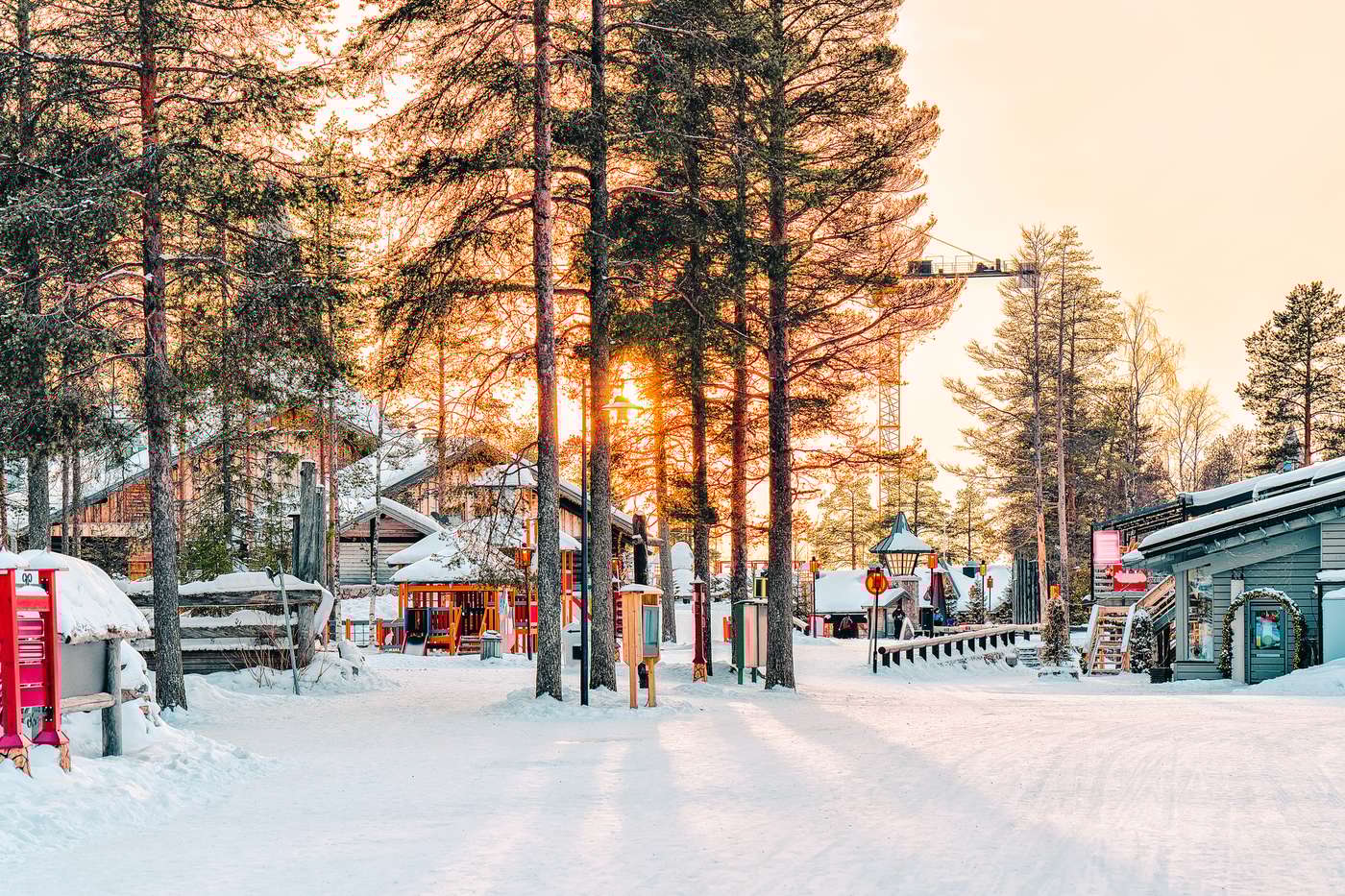
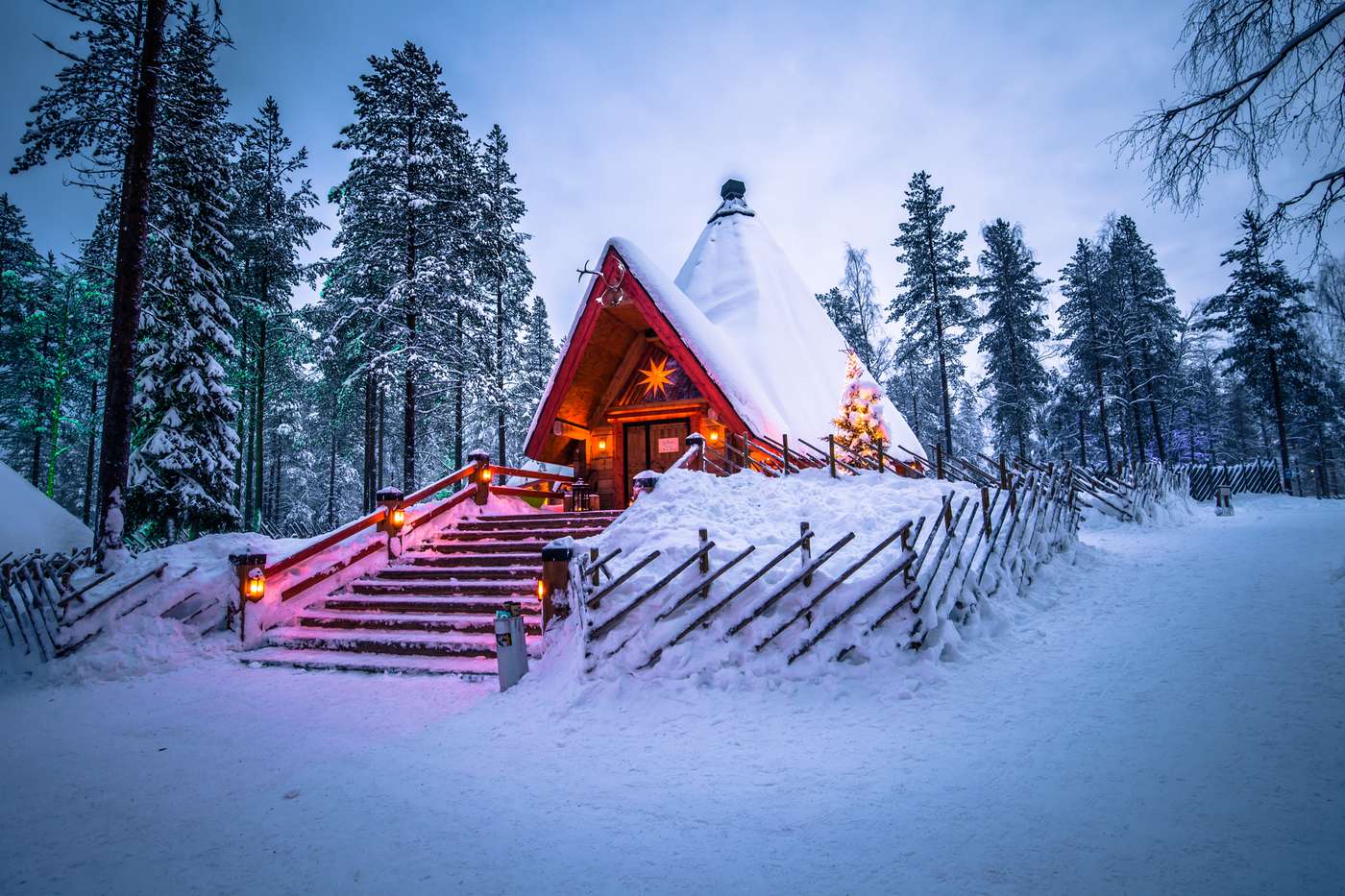
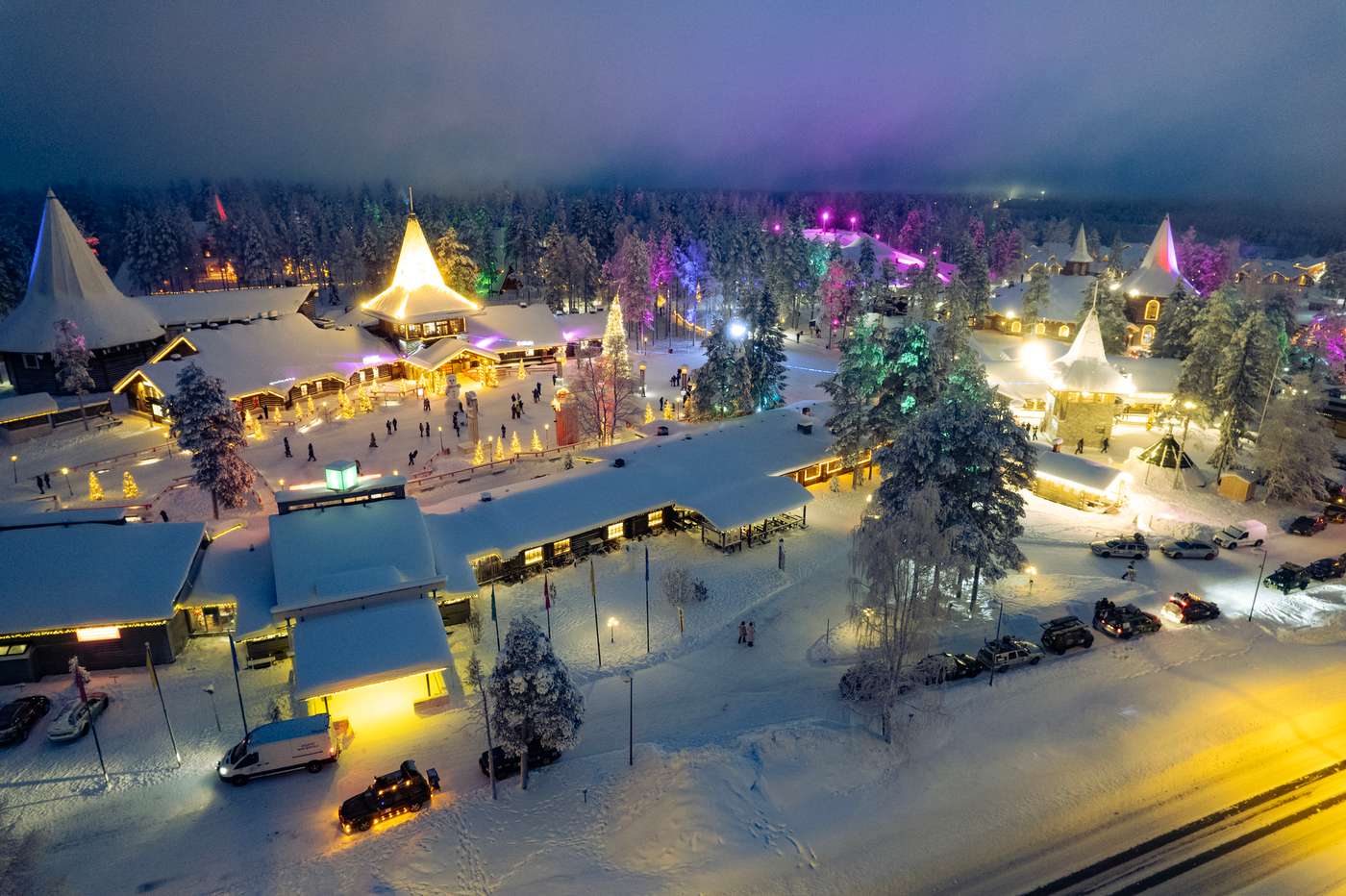
Santa Claus Village - Rovaniemi is Santa's official hometown, right on the Arctic Circle. Open year-round, with the Post Office, elf workshops, and the chance to cross the Arctic Circle line. Peak magic in December.
The biggest ski country in Finland - Yllas is the largest ski area in the country, with 63 slopes and its longest run at 3km. Levi is the busiest and best known, with 44 slopes and a stop on the Alpine World Cup circuit. And Ruka, up at Kuusamo, has the longest season of the lot, running from early October into May.
Glass Igloos - Fall asleep watching the sky shift colours from a heated glass-roofed cabin. Northern Lights Village in Saariselka has 80 Aurora Cabins with built-in aurora alerts.
Husky and Reindeer Safaris - Pick your preferred furry transport. Huskies for the full-speed forest dash, reindeer for the slower storybook moment. Most excursions include hot drinks and thermal suits.
Midnight Sun - In midsummer (June to July), the sun doesn't set at all. 24 hours of daylight, crystal-clear lakes, hiking trails, and a completely different side to Lapland.
Lapland is perfect for you if...
You have a kid who still believes in Santa, and you want to make the most of it whilst it lasts
You want a holiday your family will still be talking about in twenty years
You would rather come home with a story about driving a husky team than a tan
You want the Northern Lights without the nineteen-hour trek to see them in the arctic circle, because this is a three and a half hour flight and the view is almost as good
You like the idea of a sauna and a frozen lake, and the wombo-combo of going from one to the other
🗣️ Local Lingo — Talk Like a Local (Lapland Edition)
Up in Lapland, language shifts with the landscape. You’ll hear Finnish across the region, alongside Sámi languages in the north, each carrying deep cultural roots tied to nature and tradition. Don’t worry about perfection, locals genuinely appreciate even the smallest effort to speak their language.
Moi, MOY, Hi (the casual one)
Hei, HAY, Hello (works anywhere)
Kiitos, KEE-toss, Thank you
Kippis, KIP-piss, Cheers
Anteeksi, AN-teck-see, Excuse me, or sorry
Poro, POH-roh, Reindeer
Revontulet, REH-von-too-let, The Northern Lights, literally "fox fires", from the folk tale of a fox sweeping sparks into the sky with its tail
🏨 What are the hop hotels in Lapland?
Lapland holidays come with some of the most distinctive hotels in Europe, from glass-roofed cabins designed for aurora-watching to log chalets with private saunas and frozen-lake views. See all hotels in Lapland.
👨👩👧👦 What are the best family hotels in Lapland?
Holiday Club Saariselka has an indoor pool with a water slide, three kinds of sauna and a spa, sitting next to the slopes and a short walk from the village.
Lapland Hotels Ounasvaara Chalets are private cabins on the hill above Rovaniemi, each with its own sauna and kitchen, ten metres from the ski slopes and ten minutes from Santa Claus Village.
Holiday Club Kuusamon Tropiikki runs an indoor tropical waterpark in the Arctic, which is a strange and excellent thing to have on hand. Ruka is 20km away.
💑 What are the best hotels in Lapland for couples?
Northern Lights Village Saariselka is 80 glass-roofed Aurora Cabins built for watching the sky from bed, with an alert service you can set to wake you when the lights appear.
Lapland Hotels Sky Ounasvaara sits on the hilltop with floor-to-ceiling windows, ski-to-door access and a restaurant that ranks among Finland's best.
Lapland Hotels Akashotelli is two metres from the slopes at Ylläs, with indoor and outdoor pools and a sauna to come back to.
🎉 What are the best hotels in Lapland for groups?
Lapland Hotels Sirkantahti puts you in the middle of Levi village, eight minutes from the lifts, with a private sauna in every room and apartment.
Lapland Hotel Riekonlinna is in Saariselkä village with trails and cross-country tracks straight from the door and a safari rental shop on site.
Lapland Hotels Saaga has gondola access to the Ylläs slopes, a pool with a jacuzzi and steam sauna, and views out over the tree line.
Where to Stay on Your Lapland Holidays
👨👩👧👦 Where should families stay in Lapland?
Rovaniemi is the obvious family pick. Santa Claus Village is 10 minutes from the centre, there are reindeer farms and husky parks on every road out of town, and Arktikum Museum keeps rainy days covered.
Saariselka for families who want wilderness with good facilities. Holiday Club has a pool and water slides for the kids, Urho Kekkonen National Park is on the doorstep, and Ranua Wildlife Park (polar bears, Arctic foxes) is a day trip from Rovaniemi.
Kuusamo for something different. Holiday Club Kuusamon Tropiikki has an indoor tropical waterpark, and Ruka ski resort is 20 minutes away.
💑 Where should couples stay in Lapland?
Saariselka is the romantic pick. Glass igloos, Northern Lights from your bed, and the kind of silence that makes you forget cities exist. Deep inside the Arctic Circle with minimal light pollution.
Levi for couples who want a bit more buzz. Finland's biggest ski resort, plus a proper village with restaurants, bars, and apres-ski. The ski lifts and the cocktail bars are both within walking distance.
🎉 Where should groups stay in Lapland?
Levi has the best group scene in Lapland. 43 ski slopes, snowmobile safaris, and the liveliest nightlife north of the Arctic Circle. Bar Ihku does karaoke until 4am.
Rovaniemi for groups who want the full Arctic experience without the ski focus. Husky safaris, ice karting, Arktikum Museum, and a decent restaurant and bar scene in the city centre.
Winter 2026/2027 in Lapland
More flights than ever from home - The 2026/2027 season adds a new Newcastle route, and easyJet has moved Luton to Kittilä. Between Ryanair and easyJet there are now direct services from ten UK & Ireland airports, including Dublin, Shannon and Belfast.
New cabins for the season - A fresh batch of glass-roofed cabins and Arctic pod-suites opens for 2026/2027, and SnowVillage rebuilds itself from scratch every year with a new theme, announced each autumn.
Santa's village keeps growing - More interactive elf experiences and gingerbread making for the new season, and the Christmas season opening now lands in late October rather than November, so the festive run is longer than it used to be.
Northern Lights
Let's talk about the northern lights quickly. The solar cycle 25 peaked in October 2024, so you will read plenty of pieces saying you have missed it but don't worry, this is actually a GREAT time to see the northen lights in Lapland.
The years after a solar maximum are the good ones - As sunspot numbers fall, coronal holes on the sun become more frequent, and those send out high-speed streams of solar wind that come back round roughly every 27 days. Solar physicists have been saying for years that peak auroral activity tends to arrive a few years after peak sunspot activity, and that the declining phase produces more geomagnetic storms, not fewer.
Two windows worth knowing about - Around the equinoxes, in late September and again in March, the earth's magnetic field lines up with the sun's in a way that lets more energy through. It has a name, the Russell-McPherron effect, and it means those months punch above their weight for aurora.
Lapland Holidays 2026/2027 - Travel Guide
👨👩👧👦 What are the best things to do on a Lapland family holiday?
Meet Santa at Santa Claus Village - Rovaniemi, on the Arctic Circle, open every single day of the year. Write letters at the Arctic Circle Post Office, meet the elves, cross the line. Meeting Santa is free, the photo is ticketed, and December books up months out.
Husky sledding - Most operators take children from about four, and every trip ends with hot berry juice and biscuits round a fire. Thermal suits and boots are provided, so you do not need to buy anything.
Reindeer farm visits - Feeding, petting and a sleigh ride with the herd. Kopara Reindeer Park near Rovaniemi is a reliable pick.
Ranua Wildlife Park - Finland's northernmost zoo and the only place in the country with polar bears, plus Arctic foxes, wolverines and lynx in forest enclosures. 80km south of Rovaniemi, about an hour, open every day of the year.
Arktikum - The rainy-day insurance, and better than it needs to be. Arctic life, Sámi culture and the science of the Northern Lights, with plenty for younger children. Closed Mondays.
💑 What are the best things to do for couples on a Lapland holiday?
Northern Lights hunts - Out by snowmobile or minibus to a clearing with no light pollution, then wait. Hot drinks and a campfire on most trips, and a guide who can read the forecast better than any app.
A night in a glass igloo - Northern Lights Village in Saariselkä, watching the sky from bed, with an alert service that wakes you if something starts happening at two in the morning.
A private reindeer sleigh at dusk - Silent, slow, and genuinely atmospheric when the light goes blue.
Sauna then outdoor hot tub, under the stars - Almost every Lapland hotel has a sauna, and a fair few rooms have their own. The lakeside smoke saunas are the version worth going out of your way for.
Cross-country skiing in Urho Kekkonen National Park - Straight out of Saariselkä into Finland's second-largest national park, 2,550 km² of it, with hundreds of kilometres of marked trail.
🎉 What are the top things to do for groups on a Lapland holiday?
Snowmobile safaris - Across frozen lakes and through forest, with a campfire lunch on the full-day trips. Drivers need a licence.
Skiing at Levi or Ylläs - Levi for the busiest scene, floodlit evening skiing and bars afterwards. Ylläs for the biggest ski area in Finland and Finland's longest run.
Ice fishing - Drill a hole, drop a line, sit on a box, drink something hot. Far better than it sounds.
Ice floating - Zip into a thermal dry suit, lie back in a hole cut in a frozen lake and drift about looking at the sky. The photos do a lot of work when you get home.
SnowVillage - Rebuilt from scratch every winter in Lainio, between Ylläs and Levi, with ice sculptures, an ice bar serving drinks in frozen glasses and rooms you can stay the night in. Opens 25 December, so it is a New Year trip rather than a pre-Christmas one.
Cheap holidays to Lapland
Lapland has a reputation for being expensive, but it doesn't have to be. Flights are short-haul and priced like it. Hotels are reasonable (by Nordic standards). The biggest part of your spend is excursions and eating out, and that is the part you control.
A Northern Lights minibus tour runs around €75 to €100 and a husky safari €110 to €190 per person, so a family of four doing three activities is into serious money. But if you wanna do them as cheaply as possible, we suggest booking your activities through your hotel rather than a third-party site, where rates are usually better and transfers are usually included (those little extras add up). We'd also say, pick two headline activities and let the rest of the week be free: cross-country trails, snowshoeing in the national parks, tobogganing, and aurora watching from outside your own hotel are all free and brilliant..
Self-catering makes a real difference here in a way it does not everywhere. Several of the cabins and apartments come with a full kitchen and, this being Finland, a private sauna. A weekday lunch is €11 to €15 and a pint is €6 to €7, so cooking two or three nights in changes your weekly budget substantially. Finland is also close to cashless and prices always include tax, so the number on the menu is the number you pay, and tipping is genuinely not expected anywhere.
On timing: December is the full Christmas experience and prices reflect demand for it. November has early snow and the aurora season already running. January and February are the coldest and darkest, which is exactly what you want for the lights. March gives you snow and real daylight together. There is a version of this holiday at every price point in that range, and the cheapest flights are generally the ones booked furthest out, because this is a destination people plan a long way ahead to visit.
More Destinations for 2026/2027
Finland - The whole country, from the capital's design scene and island-hopping ferries to the northern wilderness. Lapland is the headline act but Finland has depth way beyond the Arctic Circle.
Helsinki - Finland's capital is one of Europe's most underrated city breaks. Harbourside dining, the Design District, island-hopping by ferry, and a food scene that punches well above its weight. A completely different Finland to Lapland, and brilliant for it.
Rovaniemi - Santa's official hometown and the gateway to the Arctic Circle. The family pick in Lapland, with Santa Claus Village, Arktikum Museum, husky and reindeer parks, and the best restaurant scene in the region.
Saariselka - Deep inside the Arctic Circle with minimal light pollution. The Northern Lights destination in Lapland, with glass igloos, Urho Kekkonen National Park on the doorstep, and proper wilderness quiet.
Levi - Finland's biggest ski resort, with 43 slopes, the best apres-ski in Lapland, and a proper village with restaurants, bars, and adventure activities year-round.
Kuusamo - Off the beaten track with Ruka ski resort, an indoor tropical waterpark, and some of the best cross-country skiing and hiking in Finnish Lapland.
Popular Lapland hotels
More Lapland hotelsWeather in Lapland
JAN
FEB
MAR
APR
MAY
JUN
JUL
AUG
SEP
OCT
NOV
DEC
Lapland does not do halves. These are Rovaniemi's daytime highs, with the overnight figure alongside, because in an Arctic winter the gap between the two is the thing that actually shapes your day.
December - High -5°C, overnight around -11°C. About two and a half hours of daylight, and a long blue twilight either side of it that photographs better than midday does anywhere else.
January - High -7°C, overnight around -13°C. The coldest month and the best one for the lights, with roughly four hours of daylight by the end of it.
February - High -7°C, overnight around -13°C. As cold as January, noticeably brighter, and the aurora season is still going properly.
March - High -2°C, overnight around -9°C. Deep snow, real daylight and dark nights in the same trip, plus the equinox effect on aurora activity.
April to May - Highs climb from 4°C to 11°C. Snow lingers into April in the north and the light goes on and on.
June to August - Highs of 17°C to 20°C, and in June and July the sun does not set at all. Lakes, forests, hiking and a Lapland almost nobody from home has seen.
September to November - Autumn colour that Finns call ruska turns the forests gold in September, the aurora season restarts in late August, and the first proper snow arrives in November.
Cold snaps of -25°C to -30°C happen most winters, and Finland's record low of -51.5°C was set at Kittilä in 1999. It is a dry cold rather than a damp one, and with the thermal suits and boots that come with every excursion, most people find it far easier to handle than they expected.
View destination on a map
View destination on a map
FAQs
How long does it take to fly to Lapland?
How long does it take to fly to Lapland?
Direct flights from the UK to Lapland take between 3 hours 10 minutes and 3 hours 30 minutes depending on your departure airport. All direct flights land at Rovaniemi Airport (RVN), the capital of Finnish Lapland and your gateway to the Arctic Circle. Direct routes operate seasonally, primarily November to March, with year-round connections available via Helsinki.
Route | Flight time | Airlines |
London Gatwick to Rovaniemi | approx. 3h 30m | easyJet, Norwegian |
London Stansted to Rovaniemi | approx. 3h 25m | Ryanair |
London Luton to Rovaniemi | approx. 3h 30m | easyJet |
Manchester to Rovaniemi | approx. 3h 10m | easyJet |
Bristol to Rovaniemi | approx. 3h 30m | easyJet |
Outside of the winter season, the most reliable option is to fly to Helsinki and connect to Rovaniemi with Finnair, a connection that adds around 1.5–2 hours to your total journey time.
What's the time difference between the UK and Lapland?
What's the time difference between the UK and Lapland?
Finnish Lapland follows Eastern European Time (EET, UTC+2) in winter and Eastern European Summer Time (EEST, UTC+3) in summer. Finland changes its clocks at the same time as the UK, which means Lapland is always exactly 2 hours ahead of the UK and Ireland, all year round, no exceptions.
Summer (late March–late October): UK (BST, UTC+1) vs Lapland (EEST, UTC+3). Lapland is 2 hours ahead.
Winter (late October–late March): UK (GMT, UTC+0) vs Lapland (EET, UTC+2). Lapland is still 2 hours ahead.
Worth noting for families: if you land at Rovaniemi at midday UK time, it's already 2pm in Lapland, factor this into your first day planning, especially with young children.
What language do they speak in Lapland?
What language do they speak in Lapland?
Finnish is the main official language of Finnish Lapland, used in everyday life, signage, schools and business. The good news for UK visitors is that English is widely and confidently spoken in hotels, tourist facilities and resorts across Rovaniemi, Levi and Saariselkä, you will not struggle to communicate anywhere in the tourist areas.
In Lapland specifically, you may also hear Northern Sámi, one of several indigenous Sámi languages spoken by the Sámi people, who have lived in this region for thousands of years. It is an entirely separate language from Finnish with no connection to it. A few words of acknowledgement go a long way with the local community.
Handy Finnish phrases
English | Finnish | Sounds like |
Hello | Hei / Moi | Hey / Moy |
Thank you | Kiitos | KEE-toss |
Cheers! | Kippis! | KIP-piss |
Excuse me | Anteeksi | AN-teck-see |
Goodbye | Näkemiin | NAK-eh-meen |
Is Lapland good for a city break?
Is Lapland good for a city break?
Rovaniemi is a genuinely excellent short break destination, compact, easy to navigate, and unlike any other city break in Europe. It sits right on the Arctic Circle, has a proper city centre with good restaurants, the brilliant Arktikum Museum, and Santa Claus Village just 8km away. Two or three nights gives you enough time to cross the Arctic Circle, see the Northern Lights, do a husky or reindeer safari, and still have evenings for Finnish food and sauna. It works particularly well as a pre-Christmas long weekend, the festive atmosphere from late November onwards is genuinely magical and the activities are fully operational. It won't replace Amsterdam or Barcelona for culture and nightlife, but for a memorable, completely different short break it is hard to beat.
What's the best month to visit Lapland?
What's the best month to visit Lapland?
It depends entirely on what you're after, Lapland delivers very different experiences across the year.
December: Peak Christmas magic. Santa Claus Village in full swing, deep snow guaranteed, maximum festive atmosphere. Most expensive and busiest month, book everything well in advance.
March: The sweet spot for most visitors. Brilliant snow conditions for activities, days lengthening so you get proper daylight alongside dark nights for aurora hunting, and slightly lower prices than December. Widely considered the best all-round month.
November: The underrated option. Early snow, aurora season beginning, far fewer crowds and lower prices than December. Rovaniemi starts its Christmas season in November so festive atmosphere is already building.
January–February: Deepest winter, best Northern Lights conditions, coldest temperatures. Proper Arctic darkness (kaamos), the sun barely rises, which maximises aurora opportunities but takes some adjustment.
September–October: Autumn colours (ruska) in September are extraordinary. Aurora season begins in late September. A completely different and often overlooked side of Lapland.
When can I see the Northern Lights?
When can I see the Northern Lights?
The Northern Lights are visible in Lapland from late August through to early April, you need dark nights, and that window is when darkness is sufficient. The best viewing months are December through February, when nights are longest and aurora activity is strongest. September and March, the equinox months, also offer statistically higher geomagnetic activity, making them excellent alternatives with fewer crowds.
To maximise your chances you need three things: darkness, clear skies and solar activity. Lapland's position within the aurora zone (65–72°N latitude) means solar activity is frequent, but clear skies are the variable you can't control. This is why staying at least 4–5 nights significantly improves your odds, more nights means more chances of a clear sky coinciding with high aurora activity. The best viewing hours are typically 9pm to 2am local time. In 2026, the solar maximum means Northern Lights displays are forecast to be particularly vivid and frequent, one of the best years in over a decade to visit.
Where is Santa Claus Village?
Where is Santa Claus Village?
Eight kilometres north of Rovaniemi city centre, about ten minutes by car or a ride on the number 8 bus, sitting right on the Arctic Circle.
The history is better than most people realise. In 1950 Eleanor Roosevelt came to Rovaniemi as a goodwill ambassador, inspecting reconstruction after the Lapland War, and asked to cross the Arctic Circle. A log cabin was built for her visit in about a week, from logs pulled out of the river eight days beforehand. It is still standing, still called the Roosevelt Cottage, and it is the first building of what became Santa Claus Village. The village opened around it in 1985, the year Rovaniemi was declared Santa's official hometown.
It is open every day of the year. Entry is free and so is meeting Santa, though additional individual experiences, including the photograph with Santa, is not.
What should I pack for Lapland?
What should I pack for Lapland?
Layering is everything. The key system is three layers, thermal base, insulating mid-layer, and windproof outer, plus dedicated extremity protection for hands, feet and head. Most resorts and excursion operators provide full Arctic-grade snowsuits and boots for outdoor activities, so you don't need to buy specialist outerwear for your holiday.
The essentials
Thermal base layers (top and bottom) - merino wool or synthetic, not cotton
Fleece or wool mid-layer - for warmth between your base and outer
Warm hat covering your ears, your own, as provided suits often don't include these
Balaclava or neck gaiter - essential below -15°C
Warm gloves or mittens - liner gloves plus outer mitts for extreme cold
Thick wool socks - at least two pairs
Lip balm and hand cream - Arctic air is extremely drying
Sunglasses - snow glare in March and April is intense
What you don't need to bring: full Arctic outerwear, ski boots, or snowsuits, these are provided on virtually all excursions and at most hotels for the outdoor portions of your stay.
Is Lapland good for families?
Is Lapland good for families?
Lapland is one of the most extraordinary family holiday destinations in the world and one of very few where the destination itself is genuinely the experience rather than just the backdrop. Meeting Father Christmas in his actual hometown, riding a husky sled through a snowy forest, feeding reindeer at a working farm, and watching the Northern Lights from your hotel bed are things children remember for the rest of their lives.
Why families love it
Santa Claus Village: Meeting Santa at his official home in Rovaniemi is a completely different experience to a shopping centre grotto, he lives here, and the whole village sells the story brilliantly
Activities: Most husky and reindeer safaris welcome children from around age 4. Snowmobiles typically require age 7+ as a passenger and 18+ to drive
Ranua Wildlife Park: Finland's northernmost zoo, 80km from Rovaniemi, home to polar bears, Arctic foxes, wolverines and snowy owls, superb for children
Glass igloos: Many resorts offer family-sized aurora cabins sleeping up to 6, watching the Northern Lights appear through the ceiling is a magical moment for children and adults equally
Short flight: At 3–3.5 hours from the UK, it's a manageable journey even with young children
Safety: Lapland is extremely safe, all outdoor activities are fully supervised and guide-led, and the resort infrastructure is exceptionally well set up for families
The biggest practical consideration is cost, Lapland in December is one of the more expensive family holidays you can take. March offers very similar experiences at noticeably lower prices.
Can I see the Northern Lights from a glass igloo?
Can I see the Northern Lights from a glass igloo?
Yes, that is exactly what they are designed for. Glass igloos have thermally insulated, heated transparent roofs that stay frost and snow-free so your view of the sky remains completely clear however cold it gets outside. You lie in bed and watch the aurora appear directly above you without stepping outside. Most glass igloo resorts also offer an aurora alarm service, the team monitors the sky overnight and will call or message your room the moment the Northern Lights appear, so you don't miss a display if you fall asleep.
Seeing the Northern Lights is never guaranteed, you need clear skies and solar activity alongside the darkness, and clouds are the one variable nobody can control. Booking a glass igloo for at least 2–3 consecutive nights significantly increases your chances. Northern Lights Village Saariselkä, with 80 glass-roofed Aurora Cabins inside the aurora zone, is among the best-positioned properties in Lapland for aurora viewing.
How cold does it get?
How cold does it get?
Properly cold, but manageable with the right gear, which is provided on all excursions.
Month | Average temperature | What to expect |
November | 2°C by day, -7°C overnight | First deep snow, cold but not extreme |
December | -5°C by day, -11°C overnight | Peak Christmas season, full winter conditions |
January | -7°C by day, -13°C overnight | Coldest month, kaamos darkness, best aurora |
February | -7°C by day, -13°C overnight | Still very cold, days beginning to lengthen |
March | -2°C by day, -9°C overnight | Brilliant snow, more daylight, slightly easier cold |
Temperatures can occasionally drop to -30°C during cold snaps, particularly in January and February. The dry Arctic cold is actually easier to handle than damp UK winter cold, with the thermal suits provided on excursions, most visitors find it far more manageable than they expected. The golden rule: keep your extremities covered and never underestimate how cold it gets when you stop moving.
Do I need to book activities in advance?
Do I need to book activities in advance?
Yes, for peak period visits, advance booking is essential rather than optional.
December (especially 15 Dec–2 Jan): Book everything as far in advance as possible. Santa visits, husky safaris, reindeer experiences and glass igloo stays all sell out months ahead. This is non-negotiable for Christmas week.
Northern Lights tours: Popular guided aurora hunts fill up quickly throughout the winter season. Book before you travel.
Glass igloos:The most sought-after accommodation in Lapland, book 3–6 months ahead for winter 2026 stays, particularly at Northern Lights Village and Kakslauttanen.
Husky and reindeer safaris: Book in advance for peak dates; some availability for walk-ins exists outside Christmas and New Year.
March visits: Slightly more flexibility than December, but popular excursions still sell out, book your must-do activities before you arrive.
Your hotel can usually arrange excursions on your behalf, or you can book directly with local operators. On the Beach can arrange transfers when you book your holiday, add these at the time of booking to avoid airport queues after a long flight.
How do I keep a Lapland holiday cheap and make sure it's still brilliant?
How do I keep a Lapland holiday cheap and make sure it's still brilliant?
Lapland holidays don't have to cost the earth. Travel in November or January (outside the peak December weeks) for lower prices on flights and hotels. Book excursions through your hotel rather than third-party operators for better rates. Self-catering chalets with kitchens save on restaurant bills. And some of the best experiences, like cross-country skiing, snowshoeing in national parks, and watching the Northern Lights from your hotel, are free.
When is Christmas in Lapland?
When is Christmas in Lapland?
Santa Claus Village in Rovaniemi is open year-round, but the Christmas season officially launches in November with a grand opening ceremony, parades, and the first appearance of Santa. December is peak festive Lapland, with deep snow, Christmas markets, elf workshops, and gingerbread baking. If you're booking for Christmas week itself, book early because Lapland holidays in December sell out fast.