
Destination or Hotel
Departure airport
Travel dates
Nights
Guests
Destination or Hotel
Departure airport
Travel dates
Nights
Guests
Guernsey is the Channel Island that feels like rural France got washed up on these shores, 25 square miles of cliff paths, hidden bays, seafood straight from the harbour and a chilled pace of life.
Highlights of your Holidays to Guernsey 2026 / 2027
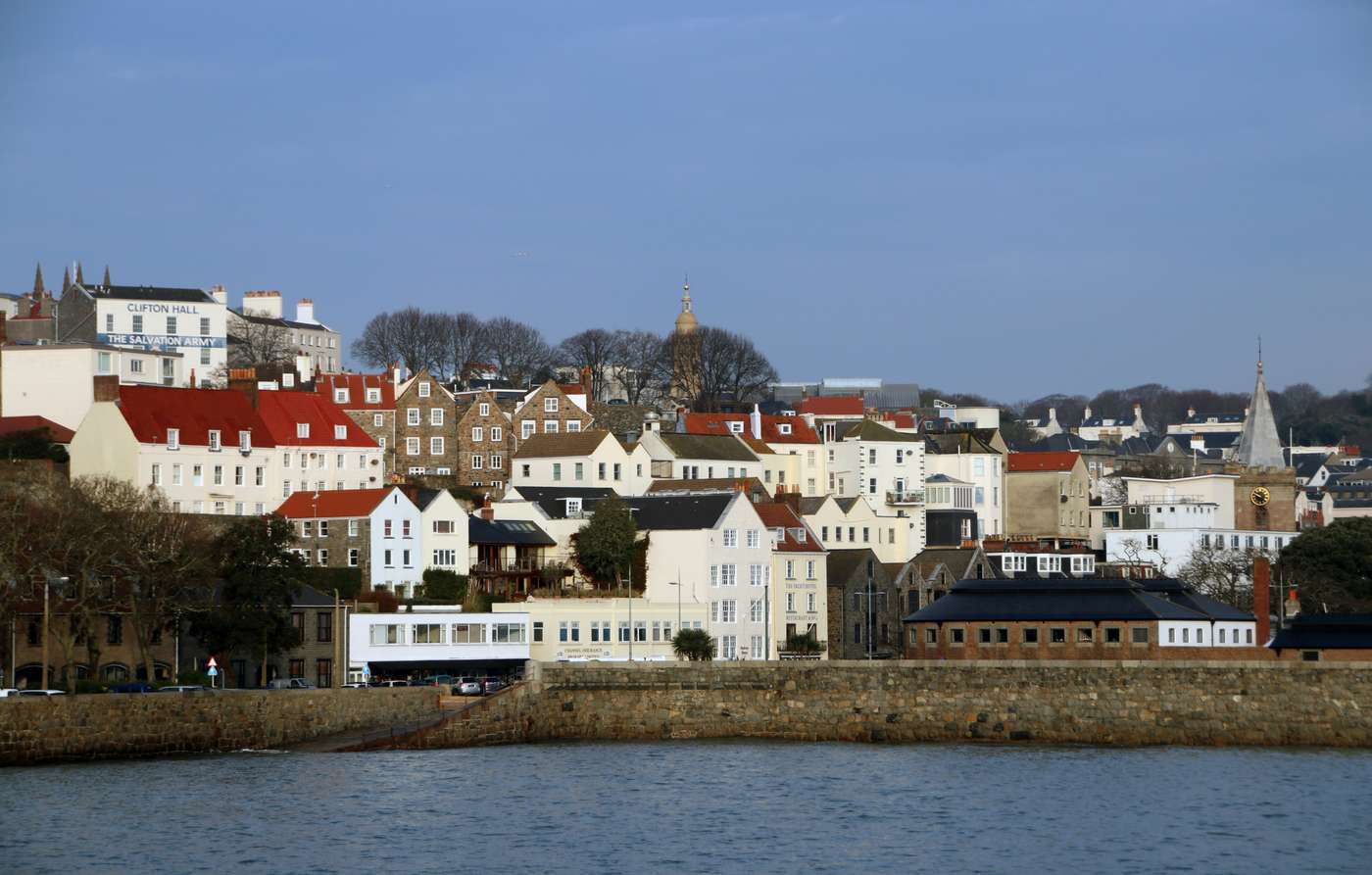
St Peter Port, one of the prettiest harbour towns anywhere - Steep cobbled streets dropping down to a marina full of masts, Regency townhouses, and more good restaurants per square mile than a town this size has any right to. Castle Cornet guards the harbour mouth and has done for 800 years, though the castle itself is closed for bridge restoration until summer 2027.
Victor Hugo's exile home - The French literary giant lived in Guernsey for 15 years and finished Les Misérables here. Hauteville House in St Peter Port is still decorated exactly as he left it, and it is gloriously eccentric. Guided tours only, so book ahead in summer.
Cliff path walks around the entire island - Over 42 miles of signposted coastal path circling the island, with the most dramatic cliff scenery in the Channel Islands along the south coast between Jerbourg Point and Pleinmont.
Herm Island day trip - A 20-minute Trident ferry from St Peter Port to a car-free island with Shell Beach, made of millions of tiny shells, and Belvoir Bay. Feels like stepping into another century.
Seafood straight off the boat - Guernsey crab, lobster, ormer (the local abalone) and oysters, landed daily and served in harbourside restaurants the same afternoon. The seafood here is as fresh as it gets anywhere.
No VAT - Guernsey sits outside the VAT system, so there is no VAT on anything you buy. Restaurants, shops, hotels and activities are all priced without the 20% you would pay on the mainland.
Good to Know for your Guernsey holiday
☀️ Weather - Mild and maritime, 18 to 20°C in summer with more sunshine hours than anywhere on the mainland. Winters are gentle (8 to 10°C) and frost is rare. The south coast cliffs catch the sun best.
💷 Money - Guernsey uses the Guernsey pound (pegged 1:1 to sterling, UK and Ireland notes and cards accepted everywhere). A pub lunch is around £12 to £15, a pint £5 to £6, and a fresh crab sandwich from a harbourside café about £8.
🦀 Fun fact - The Guernsey cow is one of the oldest dairy breeds in the world, producing distinctively golden milk thanks to high beta-carotene levels. The breed has been kept pure on the island since 1789, when a law banned the import of foreign cattle.
A holiday in Guernsey is perfect for you if...
You want a short break that feels genuinely different from home without a long flight or a currency to work out.
You would rather walk a cliff path all morning and eat crab by a harbour all afternoon than queue for anything.
You like the idea of a place where nothing is more than twenty minutes away and there is no motorway at all.
You want somewhere smaller and slower than Jersey, with more coastline than town.
You have a long weekend, not a fortnight, and you want to use all of it.
Hotels
Guernsey's hotels are a small, well-kept collection, heavy on character and light on chain-hotel anonymity. There are no big resorts here and no all-inclusive, which is part of the appeal: most are old houses that grew into hotels. Guernsey holiday packages pair the flight and the hotel, so you are booking one thing rather than three. See all Guernsey hotels or browse our picks below.
✨ Which Guernsey hotels are best for a luxury short break?
The Old Government House Hotel & Spa. The five-star grande dame of St Peter Port, with harbour views, a spa, a gym and a beauty salon, and the kind of old-school service that makes a short break feel like an occasion. Walking distance to the town centre and the ferry terminal.
La Fregate Hotel. Perched above St Peter Port with sea views over the harbour and the neighbouring islands. Boutique rooms with balconies or terraces, a Michelin-recognised restaurant, and a position that catches the morning sun beautifully.
💑 Where should couples stay on a Guernsey weekend?
Best Western Hotel De Havelet. A Georgian retreat on the edge of St Peter Port with a heated indoor pool, a spa centre and flower-filled gardens. Close to the cliff paths, quiet enough for a genuine escape, and still walking distance to town for dinner.
Le Pommier Hotel & Restaurant. A farmhouse from 1712 in the Castel parish, with eight acres of gardens, a heated outdoor pool, its own restaurant and a 10-minute drive into St Peter Port. The kind of place where the pace drops the moment you arrive.
👨👩👧👦 Which hotels are best for family holidays in Guernsey?
St. Pierre Park Hotel, Spa and Golf Resort. The nearest thing Guernsey has to a resort, set in parkland just outside St Peter Port, with an indoor pool, a full-service spa and a golf course on site. The indoor pool is the one that matters here: it means a wet afternoon does not end the day.
The Farmhouse. A converted farmhouse in St Saviour with a private pool, individually decorated rooms and award-winning cooking, roughly in the middle of the island so the beaches and the cliff paths are both a short drive away.
🎉 Where should groups stay in Guernsey?
La Barbarie. A country hotel in St Martin's with a heated outdoor pool and the south coast cliff walks close by, plus a kitchen that does proper vegan options as well as the usual. Strongly reviewed and big enough to take a group without swallowing the rest of the hotel.
Cheap Guernsey holidays and short breaks
Guernsey is an island made for short breaks, and it's very possibly to have a cheap long weekend here. Three nights will give you a chance to visit St Peter Port, a cliff walk, a beach day and a day on Herm, which is why most people come for a long weekend. If you're looking to do Guernsey on a budget, book a weekend break to Guernsey outside July and August and you will pay noticeably less for the same hotel.
The cheapest months are May, June, September and early October. The weather in all four is good enough for the cliff paths and the beaches, the sea is warmest in September, and the island is quieter than at peak. Winter short breaks are cheaper again and Guernsey works perfectly well in them if what you want is walks, pubs and seafood rather than swimming.
The island also does something for a budget that very few places do: there is no VAT on anything, so shopping, eating out and activities are all priced without the 20% you would pay at home. Most of the best of Guernsey is free anyway. The 42 miles of coastal path, the beaches, the harbour, the Little Chapel and every viewpoint on the island cost nothing. Buses run a flat fare of £1.70 in cash or £1.25 on pay as you go, which beats a hire car for a short trip, and the crab sandwich from a harbourside café that everybody remembers is just £8.
What are the best beaches to visit on your Guernsey Holidays?
Guernsey packs a surprising number of beaches into 25 square miles, and they're genuinely varied, from wide sandy stretches to hidden coves you scramble down cliff steps to reach.
Cobo Bay - The most popular family beach on the west coast, wide sandy stretch, safe swimming, beachside cafés and some of the island's best sunsets.
Vazon Bay - The surf beach, a long exposed bay on the west coast that picks up Atlantic swell. Also good for kite-surfing and long walks.
Petit Bot Bay - A sheltered south-coast cove at the bottom of a wooded valley, reached by a steep path through the trees. Small, beautiful and feels properly hidden.
Saints Bay - Another south-coast cove with a harbour wall, clear water and a café at the top of the path. Good snorkelling when the sea is calm.
Shell Beach, Herm - Twenty minutes on the ferry and worth the whole trip. A beach made of millions of tiny shells rather than sand, with turquoise water that looks Caribbean. One of the most photographed beaches in the Channel Islands, and it is on the island next door rather than this one.
L'Ancresse Bay - A long sandy beach on the north coast backed by a common and a golf course. Quieter than Cobo, good for families who want space.
Where to Stay
Guernsey is compact enough that wherever you stay, nothing is more than 20 minutes' drive away. That said, the three main areas have different characters.
St Peter Port is where most visitors stay, the island's harbour capital with restaurants, shops, Castle Cornet and the ferry terminal. Walking distance to everything in town and the best base for a short break.
South coast parishes (St Martin's, Forest) are quieter, closer to the dramatic cliff paths and hidden bays like Petit Bot and Saints Bay. Better for couples and families who want countryside calm with the coast on the doorstep.
West coast (Cobo, Vazon, L'Ancresse) is where the sandy beaches are, wider bays, surfable waves at Vazon, and spectacular sunsets. The more outdoorsy, beachy side of the island.
Local Lingo
English is the everyday language on Guernsey, and you won't need anything else. But the island has its own Norman-French dialect called Guernésiais (or "Guernsey French"), which is still spoken by a few hundred older islanders and is being actively preserved. You'll see it on street signs and pub names. A few phrases to know:
Coumben?, KOOM-ben (Guernésiais), How much? / How many?
Mèrcie bian, MER-see bee-AN (Guernésiais), Thank you very much
Tchîn-tchîn, CHIN-chin (Guernésiais), Cheers (when clinking glasses)
Vraic, VREK (Guernésiais), Seaweed (collected from beaches and used as fertiliser for centuries, you'll see "vraic" in local place names)
Ormer, OR-mer (English/Guernésiais), The local abalone shellfish, a Guernsey delicacy with strict harvesting rules
Guernsey Holidays 2026/2027 - Travel Guide
👨👩👧👦 What are the best things to do in Guernsey with kids?
Herm Island day trip - 20-minute Trident ferry from St Peter Port to a car-free island with Shell Beach and Belvoir Bay. Pack a picnic, spend the day, catch the last ferry back. The best family day out in the Channel Islands.
Saumarez Park - The island's biggest public park with play areas, a duck pond, woodland walks, wide lawns and the Guernsey Folk & Costume Museum. Open daily from the end of March to late October. Good for a half-day when the kids need to run around.
Guernsey Aquarium, La Valette - Small but well done, focused on local marine life from Channel Island waters. Rock pools, seahorses, rays. Right on the St Peter Port waterfront.
Cycling the west coast - Flat, quiet lanes connecting Cobo Bay, Vazon Bay and L'Ancresse. Bike hire from St Peter Port, half-day circuit easily doable with older kids.
Rock pooling at Petit Bot - A sheltered south-coast cove at the bottom of a wooded valley, reached by a steep path through the trees. Low tide opens up a proper stretch of rock pools and it is the quietest beach on the island for it.
💑 What is there to do in Guernsey for couples on a weekend break?
Cliff path walks (south coast) - The stretch from Jerbourg Point to Pleinmont is the most dramatic, exposed cliff tops, wildflowers and sea views the whole way. Pack a flask, take a full day.
Hauteville House, St Peter Port - Victor Hugo's exile home, decorated in his famously eccentric style, since he did the interiors himself. Guided tours only, May to September, closed Wednesdays, and booking is essential in summer.
Sunset drinks at Cobo Bay - The west coast faces due west and the sunsets are genuinely spectacular. The Cobo Bay Hotel terrace is the prime spot.
Little Chapel, St Andrew's - A tiny church decorated entirely with broken china, shells and pebbles, begun in 1914 by Brother Déodat as a miniature version of the grotto at Lourdes. Free to visit, donations go to the restoration, and it is genuinely one of a kind.
Dinner at La Reunion, St Peter Port - Fresh Guernsey seafood in a harbourside setting. The crab is landed daily, and the ormer, when it is in season, is a Guernsey-only experience.
🎉 What can groups do on a Guernsey trip?
Coasteering on the south coast - Cliff jumping, rock scrambling and swimming through sea caves along the rugged south coast. Half-day sessions, wetsuits provided, adrenaline guaranteed.
Sea kayaking - Around the north coast headlands, with the chance to explore caves and spot seals. Half-day guided trips available.
German Occupation Museum - The Channel Islands were occupied by Nazi Germany from 1940 to 1945, the only territory under the Crown to be occupied during the war, and the museum covers the occupation and the islanders' experience of it. Fascinating and sobering.
Randalls Brewery tour - Founded in 1868 and still going, with tours and tastings. Group-friendly, book ahead.
Pub crawl around St Peter Port - The harbour capital is compact enough to walk between a dozen pubs in an evening. The Yacht Inn, the Ship & Crown and the Cock & Bull are the local institutions, and all three are still very much trading.
The North Show & Battle of Flowers - Guernsey's own flower parade at Saumarez Park in late August, floats built from thousands of fresh blooms. Bigger and better attended than most people outside the island realise, and a very good reason to time a trip for the last week of August.
More Destinations
Channel Islands - The parent page covering both Jersey and Guernsey, plus the smaller islands of Sark, Herm and Alderney. If you're deciding which island to visit, start here.
Jersey - Guernsey's bigger sister island, with wider beaches, a stronger food scene and more nightlife. St Helier is a proper small town where Guernsey's St Peter Port is a harbour village. Both brilliant, but different characters.
Popular Guernsey hotels
More Guernsey hotelsWeather in Guernsey
JAN
FEB
MAR
APR
MAY
JUN
JUL
AUG
SEP
OCT
NOV
DEC
View destination on a map
View destination on a map
FAQs
When is best to visit Guernsey?
When is best to visit Guernsey?
May to September is the main season, with the warmest weather, the calmest seas and everything open. July and August are peak, with the best swimming conditions and the longest days.
May and June are brilliant for walking the cliff paths without the summer crowds, and the wildflowers along the south coast are at their best.
September and October are still mild and often sunny, with quieter beaches and lower prices. The island works year-round for a short break, the winters are gentle and the pubs are cosy, but swimming and outdoor activities are firmly summer territory.
What is the food like in Guernsey?
What is the food like in Guernsey?
Guernsey's food scene punches well above its size. The island's seafood is the headline, crab, lobster, oysters and ormer (the local abalone, harvested only on designated days between January and April) are all landed fresh and served the same day. Guernsey Gache is the local fruit loaf, rich with dried fruit and traditionally served with Guernsey butter (which is distinctively yellow thanks to the beta-carotene in Guernsey cow milk). La Reunion in St Peter Port is a standout for seafood in a harbourside setting, and The Auberge does modern cooking with a strong local-ingredient focus.
Is Guernsey a good family holiday?
Is Guernsey a good family holiday?
Yes, and it is one of the safest, most manageable island holidays you can do with kids. The beaches are clean and varied, with Cobo Bay for sandcastles, Petit Bot for rock pooling and Shell Beach on Herm for a proper adventure. Saumarez Park has play areas and wide lawns, the aquarium on the St Peter Port waterfront is small but well done, and the whole island is compact enough that no drive is more than 20 minutes. There is no motorway traffic, the pace is gentle, and the mix of beaches, history and wildlife keeps mixed-age families busy for a week without repeating anything. For a base, St. Pierre Park Hotel, Spa and Golf Resort has an indoor pool, which is the thing that saves a wet afternoon.
How long do I need in Guernsey?
How long do I need in Guernsey?
Three to five nights is the standard shape. A long weekend (three nights) covers St Peter Port, a cliff walk, a beach day and a Herm Island trip. Five nights lets you explore the whole coastline, take a day for cycling, do the German Occupation Museum properly and have time to just sit in a harbourside pub and watch the boats. A full week works if you add day trips to Herm and Sark, but most visitors find five nights is the right pace.
What events are there in Guernsey?
What events are there in Guernsey?
Guernsey runs a surprisingly full events calendar for a small island.
Guernsey Literary Festival (May) celebrates the island's literary connections, including Victor Hugo.
Viaer Marchi (July) is the island's biggest cultural festival, celebrating Guernsey's rural heritage with music, food and traditional crafts at Saumarez Park.
Tennerfest (October to November) offer ten-pound set menus at restaurants across the island and is the best-value time to eat out.
Liberation Day (9 May) marks the end of the German Occupation with harbour celebrations, parades and a public holiday.
What makes Guernsey different from Jersey?
What makes Guernsey different from Jersey?
Guernsey is smaller, quieter and more rural. Jersey has wider sandy beaches, a bigger town (St Helier vs St Peter Port), more restaurants and more nightlife. Guernsey has more dramatic cliff scenery, a stronger sense of getting away from it all, and a pace that's noticeably slower even by island standards. Jersey is the better pick if you want a beach-and-town holiday; Guernsey is the better pick if you want cliff walks, hidden coves and a genuine feeling of remoteness without actually being far from home. Both islands have excellent seafood, Victor Hugo connections and wartime history.
Is Guernsey a good holiday destination?
Is Guernsey a good holiday destination?
Yes, Guernsey is a brilliant holiday destination if you're after coastal scenery, sandy beaches and a slower pace than many mainland resorts. It mixes British familiarity with a slightly continental feel thanks to its location between England and France.
Why people visit Guernsey
Best for | Why it works |
Couples | Harbour walks, sea views and cosy restaurants |
Families | Safe beaches and outdoor activities |
Nature lovers | Cliff paths, gardens and coastal scenery |
Relaxing breaks | Quieter atmosphere than many UK hotspots |
Top reasons people love Guernsey
Beautiful sandy bays and hidden coves
Mild weather compared with much of the UK
Great walking routes and coastal views
Fresh seafood and local produce
Easy island-hopping to Herm and Sark
Guernsey is less about big nightlife and more about scenery, beach days and switching off.
What is nicer, Jersey or Guernsey?
What is nicer, Jersey or Guernsey?
It depends on the type of holiday you're after, because both islands have different personalities.
Jersey vs Guernsey
Feature | Jersey | Guernsey |
Size | Larger | Smaller |
Beaches | More beaches and bigger bays | Smaller, quieter coves |
Restaurants & nightlife | More choice | More relaxed |
Attractions | More activities and shopping | More peaceful scenery |
Atmosphere | Lively | Laid-back |
Which island suits you?
Choose Jersey if you want:
More hotel choices
Bigger beaches
Busier towns and nightlife
More attractions and activities
Choose Guernsey if you want:
A quieter escape
Coastal walks and nature
Smaller harbour towns
A slower pace
Is it expensive to visit Guernsey?
Is it expensive to visit Guernsey?
Guernsey can be a little pricier than some UK seaside destinations, but it doesn't have to be a budget-breaker.
Typical costs in Guernsey
Item | Average Cost |
Coffee | £3–4 |
Casual lunch | £10–15 |
Dinner for two | £50–70 |
Local bus ticket | Around £1–2 |
Ice cream | £3–5 |
Ways to save money
Visit outside peak summer months
Explore beaches and walking trails (free)
Use local buses instead of taxis
Book package holidays for better value
Good news
Many of Guernsey's biggest attractions, beaches, harbour walks and viewpoints, cost absolutely nothing.
Guernsey can feel more expensive day-to-day than mainland Britain, but there are plenty of ways to keep costs down.
Do Brits need a passport for Guernsey?
Do Brits need a passport for Guernsey?
British citizens do not usually need a passport to travel directly to Guernsey from the UK or within the Common Travel Area, although you'll still need valid photo identification when travelling.
Accepted travel documents can include:
Passport
Driving licence (depending on airline or ferry operator)
Other government-issued photo ID
Important to check before travelling
Requirements can vary depending on:
Your airline
Ferry company
Your nationality
Whether you're connecting through another country
Quick travel guide
Traveller | Passport needed? |
British citizen travelling directly from the UK | Usually no |
Non-UK citizen | May be required |
Connecting through another country | Often yes |
Even if a passport isn't always essential, many travellers still bring one as the easiest form of ID.
How do you get to Guernsey?
How do you get to Guernsey?
Guernsey Airport is a short hop from a good spread of UK airports, including London Gatwick, Manchester, Birmingham, Bristol, Southampton and East Midlands, and Aurigny flies direct from Dublin three times a week. The flight is under an hour and a half from almost everywhere, which is part of why Guernsey works so well as a long weekend.
The airport is about 15 minutes from St Peter Port and no more than 20 from anywhere on the island. See All hotels in Guernsey.