
Destination or Hotel
Departure airport
Travel dates
Nights
Guests
Destination or Hotel
Departure airport
Travel dates
Nights
Guests
Not sure where to stay in Ghent?
Chat with our destination guide for travel tips and FAQs.
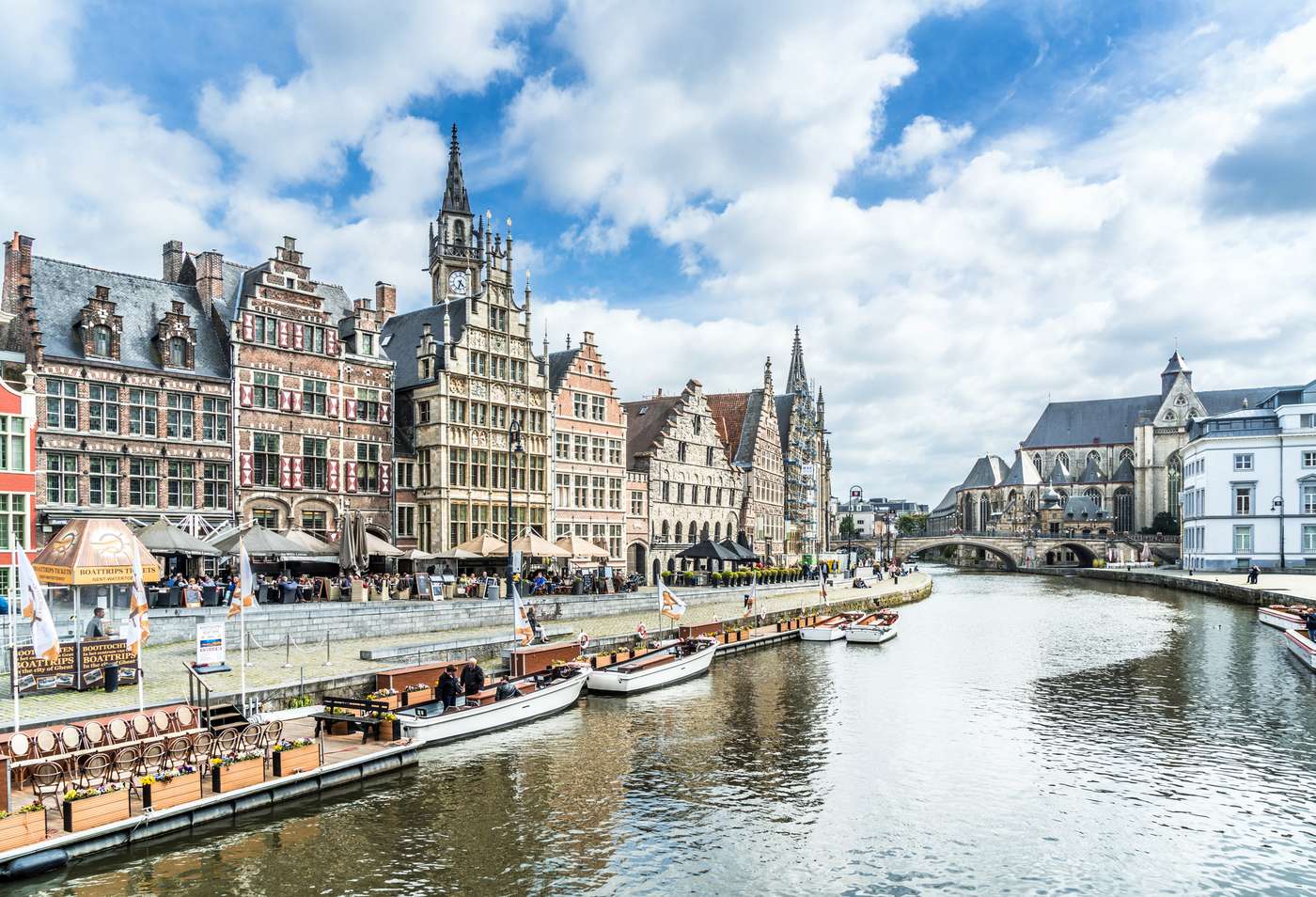
Ghent is where medieval canals meet modern creativity, cobbled streets lined with guild houses, castles in the city centre, student nightlife, and more personality per square metre than anywhere else in Belgium.
💡 Good to Know
☀️ Weather: Best from May to September with highs of 20 to 24°C. Spring and early autumn are ideal for sightseeing with fewer crowds and comfortable walking weather. Winters are cool at 2 to 7°C but atmospheric, especially along the canals with festive lights.
💶 Money: Belgium uses the Euro (€). Expect €5 to €7 for a beer, €3 to €5 for frites, and €18 to €30 for a decent restaurant meal. Ghent is often slightly cheaper than Bruges, especially for food and drinks.
🎉 Fun fact: Ghent was once one of the most powerful cities in medieval Europe thanks to its textile trade. Today, it’s one of Europe’s most vegetarian-friendly cities, with “Veggie Thursdays” still widely observed by locals.
Ghent Holiday Highlights
A perfectly preserved medieval city without feeling like a theme park
Canals, castles and gothic architecture all within walking distance
A lively student population giving the city a real buzz day and night
One of Belgium’s best food scenes, from street fries to fine dining
Best things to do in Ghent
Ghent is compact enough to explore on foot, but layered enough that every street reveals something new, from riverside views to medieval towers.
Gravensteen Castle – a dramatic 12th-century fortress in the city centre with ramparts, dungeons and panoramic views over Ghent
Graslei & Korenlei – postcard-perfect canal streets lined with guild houses and riverside cafés
St Bavo’s Cathedral – home to the world-famous Ghent Altarpiece, one of Europe’s most important artworks
Canal boat tours – a relaxing way to see hidden courtyards and historic waterfront buildings
Graffiti Street (Werregarenstraat) – ever-changing street art alley full of colour and creativity
Where to stay
Ghent is very walkable, so where you stay is more about vibe than transport. Everything connects easily by foot, bike or tram.
Historic Centre - Best for first-time visitors. Stay among canals, medieval streets and landmarks, everything is on your doorstep
Patershol District - Foodie and nightlife hub with narrow cobbled streets, hidden restaurants and cosy bars
Dampoort Area - More budget-friendly with easy access to the centre by public transport and good-value hotels
Countryside outskirts - Quiet boutique stays outside the city for a more relaxed, rural Belgian experience
What are the top hotels for your holidays to Ghent?
Ghent’s hotels range from historic boutique mansions to modern budget stays and countryside hideaways just outside the city. Most are within easy reach of the old town and canals.
Luxury
Pillows Grand Boutique Hotel Reylof Ghent – 18th-century mansion hotel with elegant rooms, spa treatments, indoor pool and a peaceful courtyard garden, combining heritage with modern comfort
Boutique / Couples
Hotel Orion – stylish Art Deco-inspired hotel with unique rooms and both indoor and outdoor swimming pools, ideal for a relaxed city break
Value
ibis budget Gent Centrum Dampoort – modern, practical base with secure parking, fast WiFi and an all-you-can-eat breakfast buffet, ideal for short stays
Unique stays
B&B De Stuifduinen – highly rated boutique B&B with individually designed rooms, private patios and a rooftop terrace with panoramic views over the surroundings
t Aards Paradijs – intimate countryside escape with just two rooms, a garden setting and an excellent on-site restaurant for a slower-paced stay
Local Lingo
Ghent is in the Dutch-speaking part of Belgium (Flanders), but English is widely spoken everywhere, especially in hospitality and tourist areas. You’ll have no issues getting around.
Hallo – Hello
Dank u – Thank you
Alstublieft – Please / You’re welcome
Een biertje, alstublieft – A beer, please
Waar is…? – Where is…?
Hoeveel kost het? – How much is it?
And like the rest of Belgium, you’ll notice regional language differences, Flemish Dutch in Ghent, French further south, but English bridges everything easily.
Ghent holidays 2026 / 2027 travel guide
Things to do for families
Ghent works brilliantly as a family city break thanks to its compact centre, boat trips and interactive attractions.
Gravensteen Castle – kids love exploring the medieval fortress, towers and armour displays
Boat tours on the canals – easy, relaxing sightseeing with plenty to look at
STAM City Museum – interactive museum explaining Ghent’s history in a modern way
Citadel Park – large green space with playgrounds, ideal for downtime between sightseeing
Things to do for couples
Ghent is one of Europe’s most romantic small cities, especially at night when the canals light up.
Evening canal walks – illuminated guild houses reflected in the water
Riverside dining at Graslei – candlelit restaurants overlooking the canal
St Bavo’s Cathedral – quiet cultural stop with world-famous artwork
Hidden courtyards – discover tucked-away patios and medieval alleyways
Things to do for groups
Ghent has a strong student population, so nightlife is lively but still laid-back compared to bigger cities.
Dulle Griet – famous beer bar with hundreds of Belgian beers and a quirky shoe-for-beer deposit system
Waterhuis aan de Bierkant – riverside drinking spot with local brews and a relaxed atmosphere
Overpoort Street – student nightlife strip with bars, music and late opening hours
Craft beer tours – guided tastings across the city’s best breweries and pubs
More places to visit from Ghent
Bruges – 25 minutes by train, classic medieval postcard city
Brussels – 35–40 minutes, capital city with museums and architecture
Antwerp – around 1 hour, fashion, diamonds and creative energy
Popular Ghent hotels
More Ghent hotelsWeather in Ghent
JAN
FEB
MAR
APR
MAY
JUN
JUL
AUG
SEP
OCT
NOV
DEC
View destination on a map
View destination on a map
FAQs
Is Ghent better than Bruges?
Is Ghent better than Bruges?
It depends on the type of trip you want. Ghent is often described as more authentic and lively, while Bruges feels more romantic and picture-perfect.
Key differences
Ghent | Bruges |
Lively student city | Quiet medieval town |
More locals than tourists | More tourist-focused |
Strong nightlife & bars | Relaxed evenings |
Street art + canals + castles | Postcard canals & cobbles |
Quick takeaway
Choose Ghent if you want culture + nightlife + a local feel
Choose Bruges if you want fairy-tale romance and slower pace
Best option: do both, they’re only ~25 minutes apart by train
How many days do you need in Ghent?
How many days do you need in Ghent?
Most visitors find 2 to 3 days in Ghent is ideal. The city is compact, but packed with castles, canals, museums and food spots.
Suggested stay length
Duration | What you can do |
1 day | Old town highlights + canal walk + castle |
2 days | Add museums, street art, food spots, evening bars |
3 days | Relaxed pace + boat tour + nearby day trip |
Quick takeaways
Perfect weekend city break destination
Easy to combine with Bruges or Brussels
No need for a long itinerary, everything is close together
Is Ghent walkable?
Is Ghent walkable?
Yes, Ghent is one of the most walkable cities in Belgium. The historic centre is compact, flat and designed for exploring on foot.
What’s within walking distance
Gravensteen Castle
Graslei & Korenlei canals
St Bavo’s Cathedral
Main shopping streets
Most bars and restaurants
Getting further out
Trams and buses cover outer districts easily
Bikes are widely available and very popular
Train station (Gent-Sint-Pieters) connects to Bruges, Brussels and Antwerp
Transport tips
You can see most of Ghent without transport
Public transport is only needed for outer neighbourhoods or day trips
When is the best time to visit Ghent?
When is the best time to visit Ghent?
Ghent is a year-round city break destination, but the experience changes with the seasons.
Seasonal guide
Spring (Mar–May): Mild weather, fewer crowds, perfect for walking
Summer (Jun–Aug): Lively terraces, festivals, canal-side dining
Autumn (Sep–Nov): Cosy pubs, golden colours, quieter streets
Winter (Dec–Feb): Christmas markets + atmospheric canals
Tips
Best overall: May–September
Best atmosphere: December (festive season)
Best value: Spring and autumn midweek trips